Tuesday, 16 September 2014

S2W10: Tweet, Tweet, Tweet

Three weeks until the end of year exam period begins!
Our exam timetable is out!
& The sunshine is too!

Subjects at a glance:
Anatomy has now covered muscles of the shoulder and arm.
MSK is challenging our clinical reasoning - how we diagnose and plan treatments.
Neuro topics covered this week include spasticity, muscle tone and reflexes.
Pharm has discussed endocrine pharmacology.

I start writing this blog on Monday and quite often wonder what exciting things I will write about in the week (or if I will even have anything interesting to report!). So I was pleased to see that lecturers are contributing to the clinical and academic physiotherapy community on social media, namely, Twitter. I have decided to follow a few in the hope that they continue to post interesting links (and perhaps put up some end of year exam hints... wishful thinking, right?!). Interested to see what they tweet about? - Follow the links below:

Clinical Biomechanics Otago - @OtagoBiomech
Centre for Health, Activity & Rehabilitation,  UoO - @OtagoCHARR
Physio Clinics, UoO - @PhysioclinicsDn
University of Otago (UoO) - @otago
You can even follow journals and celebrities (physio staff included)!

Feel free to Tweet to me @PhilNZ10 about this blog.

Anat dept put choc up for grabs in a mid-lecture quiz which featured (90% anatomy questions and 10% random questions like 'how many films has Rachel Hunter starred in'? And 'who was the first international artist to feature at Dunedin's Forsyth Barr Stadium?') Do physios need to know general knowledge questions like this? Probably not, but it'll save dividing the chocolate between 100 students.... because we are all pretty good at anatomy - it's our bread and butter! We also learnt a quirky phrase to remember attachment sites on the bicipital groove: "a lady between two majors"... Tere's Major, Latissimus Dorsi, Pectoralis Major.

Pharm lab was all about diabetes. One task was to test our blood glucose level. My fasting blood glucose level was 5.2mmol/L which is within the normal range of 3.5 to 5.5mmol/L. It is on the higher side of the normal range, probably because I finished off a reasonably large tin of pineapple pieces (with Weetbix for breakfast) an hour or so before that lab. Good to know my pancreas is working! Blood glucose measuring involves drawing blood with a pricking device and using a machine to analyse the blood. Also in the lab we had a go at self-administering a subcutaneous injection (for type1 diabetics, this would have insulin in it). The hardest part was getting over the psychological barrier of stabbing your stomach fat! There was no pain associated with the injection thankfully! If you are diabetic your doctor or physio can better inform you about what is involved and how to use the equipment.


Tip for surviving physio: Give everything a go at least once - you need to be able to relate to patients experiences!

In social events, there was a combined 2nd and 3rd year BYO on Friday evening!

A little bird told me that they were also tweeting this week... well, not so much told me - rather I heard them tweeting. The pleasures of spring! 

Tuesday, 9 September 2014

S2W9: Dodge, Dip, Duck, Dive and Dodge

Monday, 8th September: World Physiothearpy Day
The school of physiotherapy organised for students to give 10min massages to the public as a part of world physiotherapy day. Massages were given for a gold coin donation with proceeds going to the campaign to save the community physio pool. This was a very popular event! People seemed to want to get a massage - some people waited for up to 45min... that's how popular this event was! I began massaging around 4pm for an hour and encountered a wide population sample including a 91 year old male! This is the oldest person I've massaged yet! I wonder if I'll ever be able to match or beat that age (for giving a massage to) in my professional career as a physio!

Our PHTY255 lecture had us appreciating disability and attempting to shift our global appraisal of what it means to be disabled. We looked at the medical model and conflicting (but also very agreeable) psychosocial paradigms of disability. Obviously all the paradigms have consequences, assumptions, merits and constraints. It's a field of study in itself and so we just had an introduction lecture to it this week. We were told about Tainafi Lenfono 'Nafi' - he is a 4th year student at Otago University's brother physiotherapy undergraduate institute -  AUT University in Auckland, New Zealand. Nafi is passionate about sport performance and himself currently plays at an elite level in New Zealand. Furthermore, he has a determined and optimistic outlook, having overcome many lifestyle challenges most of us, New Zealanders, would fall short of achieving in such good spirits. Nafi become a tetraplegic having received an injury playing rugby in 2007. Since then he has overcome many challenges, begun studying physiotherapy at AUT University (which has, in itself, many physical challenges) and is looking to graduate as one of the first (if not, the very first) tetraplegic physiotherapist in the world. This is an inspirational feat.


Disability is NOT a defining feature of any person, rather we all have internal constraints with medical and social consequences. We should focus on "ability" and how each individual defines themselves.... how would you like others to know you?

Dodge, dip, duck, dive and dodge: the 5D's of Dodgeball. Physiotherapy has it's own five D's: dysarthria, double vision, dysphagia, dizziness and drop attacks. But often, it feels like we, as physio students, are playing dodgeball. In physio we're dodging red-flagged conditions and referring them to their doctor; we're dipping on one leg to demonstrate exercises for knee rehabilitation; we're diving into text books for self-directed learning tasks which seem to have almost completely permeated PHTY254 neuro and MSK; and many students are dodging health care staff, equipment and patients on our placements as they busily rush around the hospital. Thankfully nobody is throwing syringes, patient folders or needles at us if we do get in the way! Dodgeball (the actual game) is pretty fun - it's a shame we haven't played it yet in our labs! Some students might have had to dodge, dip, duck and dive from golf balls and clubs on Friday! ...

This week played host to the annual student physio golf tournament!

My last day of placement for 2014  was on the 8th floor of Dunedin public hospital. Time to organise and hand in my placement portfolio for the year! The placement started with rushing around trying to find our supervisor and ended with getting out of the lift on the wrong floor! This was very amusing for us! Between this, we had another great placement and was allowed to help with transfers, discuss and contribute to SOTAP notes and even sit in on a 'rounds' meeting. This was very comical - the staff are simply full of life and making the most of treating ill patients - hopefully they pass on all that positive energy. Although this was my favourite placement to date; the highlight of my week was having some fun away from class, i.e. giving back to the community (massage on Monday) and enjoying the outdoors. In particular, a group of us had a go at 'steel wool photography' at Sullivan's Dam. You soon get to know the class mates with similar interests and the ones who just like to light things on fire!


One of my favourite places in Dunedin is up Flagstaff walking track. I walked up here on Sunday last week - it was truly a day of sunshine! You could actually run up here from university if you were fit and had a few hours to spare (and then a few hours back). If you value your outdoors or country landscapes, then Dunedin is the city for you!!


Tuesday, 2 September 2014

S2W8: Onward & Upward!

Spring is here - we survived the winter! 
(It probably wasn't as bad as we made it out to be).

Having said that, I did start the week with another cold! More phlegm to expel and a headache. I admit that I did skip a few lectures in an attempt to recover in time for Thursday's placement. I did however attend my labs and tried to uphold the highest of hygiene standards with the help of some cold medication..... drugs!!!

Not that my intentions are to advertise any drugs through this blog!
I'm on my third and final placement for the year, again at the Dunedin Public Hospital. However, I'm a few floors up from the outpatients physiotherapy clinic (eight floors up to be exact)! It's nice to be finishing on top (there are only eight floors to the Dunedin Public Hospital) with a mixed bag of patients including elderly who have fallen, patients with chest infections, strokes, other neurological conditions and oncology patients. I think the hospital placement is going to be my favourite. Physio is a team sport, there is an amazing interaction between physios and other staff - I simply could not describe how awesome it is. Bring on next week!

Quote of the week: Physio: "Are we your favourite people in the hospital now?" [Patient smiles but withholds a reply]... Physio continues, "We're all seeking your attention, so just tell all the staff that they're your favourite."  - there seems to be a bit of rivalry (healthy competition) between the nurses, occupational therapists and physios to be the best health team.
Physio sign I saw on the way up to 8th floor

Halothane, Enflurane, Isoflurane, Desflurane, Sevoflurane... Diazepam, Lormetazepam, Nitrazepam, lorazepam, clonazepam, flumazepam, tremazepam, triazolam, midazolam, chlordiazepoxide... You get the idea, there are a lot of drug variations with common suffixes! Thankfully so, as this helps us to distinguish which family or class of drug they belong to. Lecture one for pharm this week covered anxiety (anxiolytic action), sleep deprivation (hypnotic action) and general anaesthetics (sedative action)... with comprehensive insight to the mechanism of action involved. We also briefly discussed the Michael Jackson - propofol incident. The joke for the dental students in our lecture was to use the drug 'midazolam' for dental surgeries because it produces retrograde amnesia i.e. they won't remember the bad surgery experience!

Pharm on Friday 9am was also interesting as we discussed local anaesthetics, with the suffix -caine. Yes, like cocaine! But the biggest laugh was in relation to the deadline for our pharm assignment. Lecturer: "I know there have been a few emails from students confused about the deadline for the assignment - the lab manual says 1pm today, on online it says 5pm. I would like to clarify it here now, that the deadline is actually 9:30am." The class reaction was classic! Lots of panicked people! The lecturer: "bazinga" (quoting the tv series, Big Bang Theory - a phrase used on the show telling that you've been the subject of a great joke), "that's better than two cups of coffee!" (Yes, we were all awake now!!) I loved the joke. Well played/executed, great start to a Friday morning. I had submitted my assignment earlier in the week - so I got to enjoy this moment for all it was worth.

MSK labs continued with Mulligan and Maitland manual therapy concepts and techniques. This included manual therapy from grades one to four for mobilisations (we'll cover grade five, manipulations, next year) and mobilisation with movement (MWMs) techniques. MWMs had students + patients buckled together into a car seat belt.... well sort of - more like a lap belt from older vehicles from around 1990 with a buckle/clip joining a continuous loop/belt (obviously this technique is not done in a car).

MSK round two later in the week focused on whole knee and hip replacement rehabilitation. We learned the role of physios from pre-op through to post-op and discharge. These joint replacements sound easy to rehab, but there are many movements which are contraindicated, this requires the use of other techniques and a multidisciplinary approach - I for one,  think the occupational therapist sock aid is awesome!! (https://www.youtube.com/watch?v=zeVLLj-WLuA)

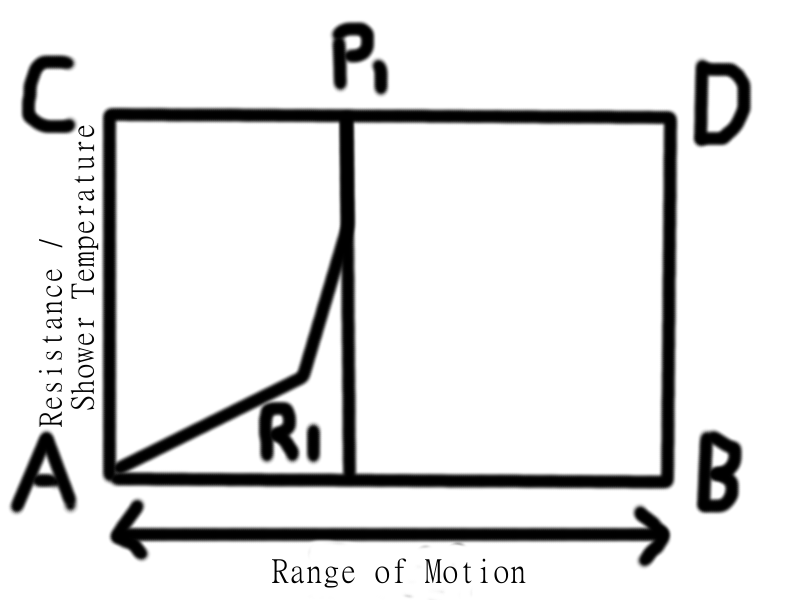
[Knowledge of movement diagrams may be a helpful prerequisite for understanding this paragraph]. One morning whilst taking a shower I ended up practising my manual handling skills (in an abstract sort of way) on the shower water lever. I decided the water temperature could be optimised by increasing the temperature. I knew the lever could be a little bit jumpy so I applied my manual skills. First I found resistance one (R1) by carefully applying pressure (note that resistance was felt at the beginning of the movement, therefore the lever hadn't yet moved - temp remained the same). I knew the water temperature I couldn't tolerate would be labelled P1 (pain 1). With this in mind I re-applied the most delicate pressure to the handle as to feel the point of resistance before the handle turned (R1). At this point I began a 4- mobilisation (the temperature increased ever so slightly, this was good!). I then got a bit impatient and tried a level 4 mobilisation (too hot, too hot!! - Quick turn of the handle back to square one - this must be what a manip feels like haha!). In the end (and after a few attempts) I had to settle for a Luke-warm shower. The distance between R1 and P1 must have been a 4-- or something. I do however recommend this as a great physio training exercise - no doubt I'll be trying this again in the shower tomorrow. I used my photoshop skills to draw out a diagram (below).

Medicing for Dunedin Tech is drawing to an end, we've lucked out of first place... next season boys!

The School of Physiotherapy is holding a fundraiser for the community physio pool (I done my aquatic physiotherapy training there earlier in the semester). It's a bit run down and the district health board were looking to close it. The physio students are giving massages for a small donation next Monday to help out / to show our concern - come and book in for a massage!

Luckily the weather over this first week of spring has been fantastic - long may it continue!

Thursday, 28 August 2014

S2 Mid-Semester Break

Top of Sandfly Mount

Sea Lion!

Cargill's Castle at night

Me through a window at Cargill's Castle... Aurora Australis going on behind me!!

Tunnel Beach with Aurora Australis (southern lights)

Aurora Australis - active storm!

Basically, my mid-semester break had me chasing night lights, wonderful views and wildlife around Dunedin... Yes, all this is from Dunedin, New Zealand!!

Also, I continued to medic! Dunedin Tech are now fighting for second place! Only one more game to go next week!


I'm still working on my photography skills.

Monday, 18 August 2014

S2W7: Life on the Pharm

Quote of the week: "There is no surgery that we cannot make worse" - orthopaedic surgeon taking us for a lecture on fractures. That quote would certainly make many patients feel uneasy going into surgery.  Also from the same lecturer, "orthopaedic surgeons have a 'rule of three', reduce, hold and rehab... any more would be too complicated". This was probably the most humorous lecture all week as he also shared/bragged (jokingly) about how fast he could perform surgeries "my personal best time for a hip replacement was 15 minutes, all before the bleeding starts - but then I have to reopen them...".


The week began on Sunday with an early morning isolation to study at the university computer lab suites... we're talking 7am here! The computer suites have 24/7 access via a scanner that reads a chip in your Student ID card (then you enter your access code). I had to catch up on a few lectures of pharmacology for there was a mid-semester test on Tuesday morning!! I closely associate pharm with big/long chemistry words like 'phenylethanolamine N-methyl transferase' and gibberish drug names like 'suxamethonium'... often we would rather suck meth on a mmmmm... just kidding!! Methamphetamine is really dangerous! Meth can act indirectly to release noradrenaline from neural vesicles, which then increases heart rate, BP, dilates pupils, inhibits gastric activity etc. Methamphetamine addicts can be identified by shining a bright light into their eyes (when their pupils don't constrict you may think 'Meth!?!'), also they are likely to be constipated (don't go monitoring your flatmates toileting habbits though! There are plenty of other, more observable-friendly, signs)


Our pharm mid-term exam covered aspects of pharmacokinetics, pharmacodyamics, antiplatelet & anticoagulants, cholinergic and adrenergics, anti-inflammatory drugs, analgesics & anesthetics, some drug interactions etc! Pharm is interesting and challenging - there are many pathways, receptors, sites of action and classifications to know. Lucky it was a multiple choice test!! When it comes to clinically treating patients, this course will be super helpful, but often I will be looking drugs up and suggesting patients to see their doctor or pharmacist.

There was a class photo on Tuesday too. This was organized by the physio student executive for the second and third year students. The class photo is to be purchased, so I don't think I will get a copy up on this blog.

I'm still medicing for Dunedin Tech, but the season is drawing to a close in a few weeks. We've had a good mix of wins and loses and are currently running for second place in the Otago premier league. Hopefully the team running to win will lose a few games so we can catch up on points (if we draw equal our team will win the league based on goals scored over the season). I'm medicing again this weekend and as the team is playing two games a week to finish the season on time, there are a lot of strapping and massages given to battered bodies before the games - one player broke his fibular (but unfortunately I wasn't medicing on that day!)

 
And so I had a birthday... I arrived in on Monday to the 8am lecture to be greeted with a birthday card! This was prepared last Thursday (I discover this having thought that I missed a class, because surely I would see this being done!) and I was completely oblivious! Well done to my peers for organising such a great surprise!

This was the last week of new material on the lower limb in anatomy. We learned about Tom, Dick and very naughty Harry... a.k.a Tibialis posterior, flexor digitorium longus, artery, vein, tibia nerve and hallucus longus! Did you know that some people do not have the muscle 'peroneus tertius' in their leg? Well, now you do! The next half of the semester will focus on the upper limbs.

We had another clinical placement debrief and heard stories from peers about patients with schizophrenia seeking treatment in a physiotherapy setting. This tied very well in with a lecture on ethics focusing on patient's rights. In New Zealand health practitioners must comply with the legal legislation "Code of health and disability consumers' rights" which is basically the 10 commandments of patients rights.

The semester finished with a pharmacology lecture on muscle relaxants covering spasmolytic and paralytic (neuromuscular) agents. We were informed about the toxin used on arrow heads by native American tribes and how we could load arrow heads and shoot patients with muscle spasm in our clinical practices. I'm joking, of course! Curare is however the plant substance that spasmolytic (spasm stopping) agents are derived from. Curare itself has been useful for hunting animals as it is an antagonist to ACh receptors at the neuromuscular junction (stops the muscle from firing). Hunters can eat the animal meat and not be affected because Curare is not bioavailable orally. Surgeons most commonly use paralytic agents to immobilise their 'pray-tents'... but make sure they administer an analgesic as well before operating! Oh, and the medical application of botox was covered too - it's not only used to make people's faces more "beautiful".

In more personal news, I have a flat sorted for 2015 and have been employed for 10 hours per week (on top of being a full time student). We are now on a one week mid-semester break. When we get back it will be spring (September)!

Wednesday, 13 August 2014

S2W6: Build Me Up Buttercup!

Last week I mentioned that I was going to take a warm-up for the diabetes classes with some class mates this week. Our clients were put through their paces with a little dance routine to the song 'Build me up buttercup" by The Foundations. Admittedly, the routine was a little bit difficult in terms of tempo and short regular changes to the next movements! I found it to be a bit difficult remembering the steps myself, even with two others calling out the moves as we went! It was a good laugh, and I hope the males in the group enjoyed this feminine warm-up... social norms shouldn't be left uncritically challenged - even if you do feel a bit embarrassed waving your arms around to a cheesy song! I led the cool down - that's something you can do with two left feet! The supervisor said it was the [quote] "best warm-up by a second year group that I have seen".

We've learned objective assessment strategies for joints below the lumbar vertebrae, finishing with the clinical biomechanics and assessment of the foot. Future MSK labs will involve case studies and applying our subjective and objective assessment skills to diagnose disorders and to clinically reason treatments for common musculoskeletal conditions.

The quirk of the week was a lighting problem in the Barnet lecture theatre for neuro. The lights would systematically turn off over a 30 second period. The lecturer had to continually increase the brightness or turn the lights on again between demonstrating physical assessments. The lab ended half an hour early due to the lighting inconvenience even though most of the class could have contributed to adequate lighting with their mobile phone flash-lights! If only we had brought candles!

"Hello Mrs Atrial Fibrillation, how is your husband Mr Diabetes-hypertension today?" Obviously this is not how we address patients. Unfortunately their condition often sticks more readily in our minds than their name. Here is this week's tip for surviving a community physio placement: how to remember patient names. Get to know them on a personal level. Trust me, it's not that easy but here is how it can be done:
  1. Introduce yourself. "Hi I'm Phil. What is your name?" - they will usually reply telling you their name. DON'T write it down in front of the patient unless it's a formal conversation! If you didn't catch it you can ask again immediately after otherwise wait for the end. If you don't think you can pronounce it, either ask them now or wait until the end of your conversation!
  2. Small talk. Start with the weather, if they're enjoying the clinic, where they're from and you can tell them where you're from too. Use their name in conversations and repeat it over and over in your mind.
  3. Actively wait for a 'tell'. Just like in poker when a player unknowingly makes a gesture that suggests a poor hand of cards. Only, for the patient this is likely to be some detail that you didn't specifically ask for (or were expecting them to tell you). I liken it to a 'tell' because a few patients don't readily give away information about their personal lives (e.g. that they have a grandchild).
  4. Find out as much as is appropriate from that 'tell' and look for another 'tell'. The more you find out, the easier you will remember them as a person and not a condition.
  5. Thank them for the nice conversation and write their first name down (when you're out of their sight). Bear in mind not to write anything else as not to breach confidentiality if your piece of paper gets lost! If you cannot remember their name, ask them again at the end.

Wednesday, 6 August 2014

S2W5: Home Sweet Home

Knock.. knock.. knock... at the flat door... "Hi, we're here to see the flat!" Yep it's that time of year again. Landlords are re-listing rental accommodation for the next year and students are busy viewing the listed properties. You can often identify these people because they're roaming the streets in groups with a map leading the way (the map being the distinguishing factor between flat hunters and students heading into town to down some drinks). Unfortunately there are no early bird specials, but it sounds like a good idea to first year students regardless. My current landlord decided to renovate the bathroom without our consent or giving us any formal notice this week. I don't think any of us living here were surprised because they had painters working outside our bedroom windows for most of last week without any formal notice too. Anyway, apparently now is the time to start flat hunting! My tip for surviving physio is to choose the best possible accommodation that you can call "home" for the year. Here is a brief check-list:
  • Warmth
    • Sunshine (especially in winter)
    • Insulation of walls, roof and underlay under carpet
    • Double glazing & Low ceiling
    • Well fitting doors and windows - no leaks/water stains on the ceiling
    • Heat pump or fireplace 
    • Ventilation: extractor fans & windows
  • Location
    • Proximity to university, work or supermarket
    • Neighbourhood
    • Hill vs Plateau
    • Car parking (free!?)
    • View from inside out and from outside in.
    • Other obligations e.g. having to mow the lawns?
  •  Costs & facilities
    • Cheap Rent & Bond
    • Cheap Power, Gas & Internet
    • Furnished vs Unfurnished - check walls and curtains for mold!
    • Quality of features e.g. energy efficient appliances, smoke alarm and clothesline
    • Friendly Tenants
    • Good Landlord

This is my second week at a community physiotherapy placement. The chronic diseases class is held at Unipol, which is the student's gym at the University of Otago (free entry with a current student or staff ID card). Unipol backs on to Forsyth Stadium, a covered sport stadium for mainly rugby and soccer matches. During the placement half of the student physios contributed to a great warm up and cool down. I will be contributing to this next week with the other half of the physio students.

In many ways, University of Otago is like Hogwarts. There are many old buildings (some that look like castles!), many stairways (luckily they don't change!) and secret passages between buildings. The secret (or not so secret) passage to Barnett lecture theatre is always exciting! Barnett lecture theatre is located in the Dunedin public hospital and I feel like this is becoming our second lecture home. I like it because there is an over-bridge between the hospital and the anatomy and physiology department where Gowland lecture theatre is. Let me take you on the over-bridge (secret passage) to Barnett! The lecture theatre itself looks like it was taken straight out of the Harry Potter movie too!!


Phty 254 MSK and anatomy were in sync this week with presentations and assessment of the knee complex! We are now expected to learn the assessment techniques at home before the lab to fully utilise the lab time (perfecting the technique). This means that we partner up as soon as we enter the lab and start mobilising joints. When other students arrive, we test their joints out too! I am always pleasantly surprised to find joints that I previously thought were very well stuck together, actually have a reasonable amount of accessory movement!


Home is not only a geographical place, such as the town you live in, a flat or parents house. Home is a place of personal significance, attachment and comfort. At home this week my flatmates and I are having a potluck lunch on Saturday. I hope they decide to flat together next year! After the potluck lunch I'm travelling to my other home to see my parents - so that's two delicious meals in one day! Lucky me! It snowed again on Friday, so our Pharmacology lecture was cancelled - it was a good idea to stay at home in the warmth.