Thursday, 5 March 2015

Y3S1W2: Pistols & Screws

It's uniform purchasing time again (especially for second year students). Here's a recap of our uniform requirements: Navy blue dress pants or cargo shorts with a white polo shirt (embroidered with a physiotherapy logo). It is suggested that we have either a woollen vest or a merino pullover jersey for the winter months. If we're in the hospital, we cannot wear sleeves i.e. a merino jersey. We must wear tidy, enclosed and dark coloured shoes that can easily be cleaned if vomit, urine or other fluids come in contact with it. Our 2015 Tshirts were handed out upon payment to join the physio students association (re: discounts on social events). And later this year we will be able to purchase other sport/casual gear embroidered with the physio logo. It's cool to rep physio gear in public.
A fourth year student is ordering in some stethoscopes! We'll pull off the 'Doctor look' now for sure... it'll just be our poloshirts with the words "physiotherapy" that will give our identity away! The medical profession seems to get excited about branded gear, just like elite athletes get excited about big brands like Nike or Adidas, medical staff may get excited about brands like "Littmann". We're ordering in some Littmann stethoscopes... so that'll make us look cool. What would make us even cooler is to use them to detect dysfunction of the heart and lungs in second semester, on placements and in our physio jobs after graduation/registration.

Wine & Cheese on Wednesday, 7:30pm to midnight. Picture this: young professional physiotherapy students dressed in immaculate, semi-formal attire spending an evening mingling between peers of each year group in a casual social setting, sipping on fine wine or beer, with platters holding a variety of cheese, crackers and savoury sides placed on tables around the room, tasteful music projecting from one side of the room managed by a DJ. Pretty high class wine & cheese event, right?! Almost! All of the above is true, but now think 'great big party with loud music, disco-like lights, night club-style dancing and lots of alcohol consumed'. It was a good time - I would recommend it to 'non-drinkers' too. I met a few second years and enjoyed a few drinks myself. The wine & cheese was held at LoneStar in North Dunedin, our tickets came with two free drinks and nibble. There was a bar tab for $4 drinks (great value), with a selection of wine, beer or fruit juice available.

Social Adventure (formally 'Flat Crawl') was on Friday night. I didn't attend this, but the idea was to progress around 3rd year physio student's flats like a 'pub crawl'. The theme was zoo animals (second year students) and zoo keepers (3rd year students). Naturally there were challenges at each flat and, again, lots of drinking. It was a good night for all that attended.

Last year our lectures were almost entirely held in Gowland Lecture Theatre in the Lindo Ferguson building (departments of anatomy and physiology). This year we've changed camp ground to Dunedin Public Hospital's Barnett & Colquhoun lecture theatres!


I arrived early to Pops/path on Wednesday 8am (Colquhoun lecture theatre) to find the lecture theatre technicians setting up the audiovisual streaming between Colquhoun and Barnett. They had an audience of about five early bird students to witnessed their humorous display of checking audio and visual connections. Technician1 conferring about sound levels "[indistinguishable mumble/vocal noise from the other end] Speak up! [some moments later...] Oh, have you just discovered time travel? Your reply was a bit delayed". Student observing from our end "I think he just needs a coffee". Technician2 conferring about video quality "You're looking a bit blurry this morning, don't think it's the video quality though..." I don't think I'll mind turning up early to 8am lectures if these comedy acts continue.

We had an eye opening ethics lecture and tutorial about privacy and confidentiality. Although now considered ethically poor, historically the professionalism and care in note taking involved medical practitioners (namely doctors, nurses, etc) writing down notes about patients like "lazy slob" or "smelly young kid". When patients were given rights to view documents these absurd comments were changed to abbreviations (e.g. SYK) so that patients less likely to understand them (like an inside medical joke). The public will be pleased to know that this is a violation of patient rights and has become a very rare practice. There is now a code about privacy for health practitioners made up of 12 principles of which they must adhere to (you may be interested to check them out!): https://www.privacy.org.nz/the-privacy-act-and-codes/privacy-principles/

"To be a great musculoskeletal physiotherapist, you don't need to be the best at [performing] manipulations"... a quote from a lecturer taking us for a lab on manipulative manual therapy for the thoracic spine. There are plenty of treatment modalities in MSK physio. Having a great understanding and technique for all is important; being the best manipulator may or may not translate to best patient outcomes, especially if better results can be achieved by mobilisations or other treatment modalities. I must admit that learning how to manipulate the spine has been something I have dreamed of (... I should probably dream bigger dreams), so to learn and practice PA manipulations of the thoracic spine was very exciting for me (and for a few others, I imagine). We were taught the pistol grip technique for patients positioned in supine lying (facing the ceiling) and the screw manip technique for patients positioned in prone lying (facing the floor). I've quickly realised that I find the screw technique much easier and more comfortable than the pistol grip alternative, mainly because, during the pistol grip attempt I managed to 'click' my fingers rather than my class mates back. I'm still going to practice this though - a full set of tools is better than a near empty tool box - also I know how I can change my technique so that my hands don't hurt. The lab was very entertaining. Many students got their first 'crack/pop'... and a select few got multiple 'crack/pops' in a single manipulation! Needless to say, there were a few "woohoo's" during the lab. Research suggests that manipulation has a large psychological effect on healing - it certainly sounds convincing from a practitioner point of view too. In the same lab we palpated and mobilised joints of the ribs. Rib joints of the anterior aspect of the body can be a bit tricky for males to palpate on females - but in an assessment it may need to be done thus informed consent and protection for both patient and practitioner via palpating through a towel may be needed.

Our second MSK lab this week covered SNAG & NAG. It may sound like a family fishing trip; kids nagging "are we there yet?" and snagging fish on hooks. In the physio context, this Mulligan concept is a manual technique effecting the apophyseal joints of the spine. [Sustained] Natural Apophyseal glides is a technique based on 'Mobilisation with Movement' that when used that should instantly reduce joint pain, especially of the neck. Also in the second lab we were asked to create an exercise programme using the online software 'PhysioTec'. This is a library of exercises with easy to follow instructions and pictures for clients to take home and complete. Clients can even log on online to view their saved personal programmes if they misplace their exercise sheet. It's very helpful and easy to use! www.physiotec.org


Pathology covered acute inflammation pathways, and necrosis e.g. different types of necrosis are coagulative (myocardial infarction)/gangrenous(gangrene), liquifactive (pimples) and caseous (from smoking). I'll leave the pathology update there for this week, more next week!

The Sport Medicing course has pretty much finished for the second year students. Well done to those that attended the 'Social Adventure' last night and still made it to the Saturday lecture. The Saturday course provided additional info and sign-up forms for sport medicing opportunities. I got to give a brief overview of my experiences as a sport medic with the soccer team. I look forward to helping these second years... hopefully a few choose to medic the team that I've been working with!

Sunday, 1 March 2015

Y3S1W1: Pops!

Physio has hit the ground running, smashing almost all of our lectures this week for sixes! (The excitement of cricket world cup is still wearing off).

Here is our paper lineup for semester one!
PHTY353: Pathology - the scientific basis of disease!
PHTY354: Physiotherapy Rehabilitation Science 2 - there will be three modules covered in semester one. These modules are musculoskeletal, neurology and physical agents (electro-therapeutics).
PHTY355: Physiotherapy Clinical Practice - the more placements, the better!!

We have 8am starts again this year. Our timetable is even busier this year than it was last year. Here is a sneak peak at next weeks timetable. Thankfully, we're each in our own group (A, B, C & D). Each group will cycle through a three week period with three placements per week. My placement begins in a few weeks time. We will all have Umove at some point during the year too - this will be my  first placement. I'll fill you in on these details as they happen.


We have been informed that our grades in year three will directly influence who can apply for honors next year. There are six places up for grabs for the top academics of my year group (provided they achieve an average of A- or higher). I know of quite a few students in my cohort striving to gain physiotherapy honors. I wish them luck! On a slight change of topic... I was talking to a PhD candidate, who was doing their research at the School of Physio, about academic life and one point of our conversation in particular struck my attention. Their reality was that, of the three common career areas (teaching/lecturing, researching and practicing physiotherapy) they [realistically] were only able to pick two (research and clinical practice were his current two picks). It reminded me of the meme 'good grades, a social life, & a good nights sleep - pick any two' that was making its rounds on social media a few years ago. I'm definitely prioritising good grades - the other two will probably change on a week to week basis.

This year in our neuro rehab (PHTY354) we will study, in depth, the physiotherapists role from acute care to community rehab, and every step in between. On Monday we jumped straight in to management of acute care (intensive care, high dependency and acute stroke units) neuro rehabilitation. Content has picked straight up from where we finished off last year. Physiotherapists have a role to help patients who have been admitted to hospital with traumatic brain injury, stroke etc. Their lives are at risk, and our job is to help rehabilitate them (as a part of the multidisciplinary team) as soon as possible. We learned about intracranial pressure (ICP) and monitoring other vital signs, the contraindications and obviously the importance of physiotherapists in these early stages. Neuro labs will comprise of self-directed learning modules which form a portfolio to be assessed by the end of the year.

Pops is pathology for the professional health science programmes (medical laboratory science, pharmacy, dentistry and physiotherapy). It might be popular in that it is a shared third year paper of the above degrees but we'll have to wait and see as to whether it is popular with the students... with 8am lectures, I hope the content makes getting up early worthwhile. So far, we've discussed things like staining tissues to investigate micro-structures, cell regeneration/damage/homeostasis and cells/diseases of the blood.

Something else that goes "POP!" in the morning is toast! Wednesday was a drizzly day and I was running behind time for an 8am pathology lecture. I arrived to the lecture on time but had to sacrifice breakfast. Thankfully, the Otago University Student's Association (OUSA) provide FREE breakfasts between 9-10am during the semester and examination periods. I stopped by to satisfy my stomach before popping over the medical library to start combing through articles and physical exercises for our MSK assignment about a patient with whiplash.

MSK for PHTY354 is also a continuation of last years content. Lectures continue to develop our knowledge of disorders, clinical reasoning skills and rehabilitation protocols. We're finishing off our orthopaedic tests and treatment strategies in labs - at the end of semester one we will learn how to safely manipulate (POP! Crack!) the cervical spine. This technique must be learned under the supervision of a registered physio and may be daunting for the physio student and even more so for the recipient. I'm very much looking forward to this! In the meantime, we're differentiating structures and sources of symptoms - starting with palpation of key bony landmarks of the cervical spine and treatment such as PA and unilateral AP mobilisations. Palpation, accessory and passive movements of the cervical spine was challenging and will require some more practice - pressing on deep tissues and nerves hurt whilst compressing the carotid artery is simply concerning! Also, I'm still getting my head around which is the correct way to pronounce "cervical" - one way refers to a region of the spine whilst the other refers to part of the female reproduction system (both are spelt the same!!)

Clinical practice labs this week reminded us of SOTAP notes, how to prescribe walking aids and other useful skills we learned last year. Clinical placements begin next week for the students in the first rotation.

The student exec have been busy again organising social events. The social events are underway next week with 'Wine & Cheese' on Wednesday and 'Social Adventure' (which is replacing 'Flat Crawl') later in the week. I'm heading along to the Wine & Cheese next Wednesday - I look forward to telling you about this more in my next post.

I'm flatting a bit further away from Otago University, in North East Valley, which means I get to experience a pleasant 15-20min walk through the Dunedin Botanic Gardens on most days of the week. The Botanic Gardens offer more than a superb floral display and adventure through the themed gardens. The gardens are a place to feed the ducks (the info centre there gives you free packets of feed for this purpose), occasionally there are morning running courses signposted and over the summer period there are Sunday musical concerts.

If your landlord doesn't allow you to have animals or pets at your flat then you could consider germinating and planting seeds from fruits eaten over the summer period (or just purchase a seedling). The plants will generally need less attention than a gold-fish, cat or dog and can make your study environment a little less boring. I have had some success with a mango seed that I planted a few weeks ago... here it is! If your flat has a reputation for being cold, then I don't suggest you grow mango trees.


Saturday, 21 February 2015

Y3S1W0: Welcome to Third Year Physiotherapy!


Physio Camp for the second year students - organised by 3rd year students!

Holidays are over & it's time to unpack our books, uniform & knowledge stored from last year. We've just finished O-week (orientation week) & Camp for the second year physio students. Physio camp was first on the social calendar and I managed to pop out to see how it was all going on the second day of physio antics. Physio Camp is a three day event (Thurs, Fri & Saturday of the week before O-Week, 12-14th Feb) for students to meet other peers in a relaxed social environment. The student physio exec plan and run the event. There were games, challenges, a DJ, a bit of drinking amongst other shenanigans. The photos below are a snippet of some morning events on the physio camp.


O-Week is organised by Otago University Students Association for all university students. There are some big gigs, college sports day, toga party, wild food festival, TV3's Seven Days (live filming of a weekly TV comedy show), a tent city on campus etc. There was also a highly contested rugby match between the Otago Highlanders against the Canterbury Crusaders at Forsyth Barr Stadium - with student discounted tickets. Within the stadium there is a seating section referred to as 'The Zoo'. The Zoo is the stand reserved for students, this is probably the most rowdy stand at the stadium. And yes, students tend to dress up in supporters gear, animal onesies and other creative costumes.


We only have three papers this semester. Looks can be deceiving, the workload for these three papers is not going to be a walk in the park. Pathology is only a first semester paper - the other two (rehab science & clinical practice) are both full year papers. There have been reports from past third year students and physio school staff saying third year physio is significantly more 'involved' [read: challenging] than second year was. Some staff even recognise third year as a year where many students really become 'mature'. I'll talk about each of the papers next week when I know more.

We were warmly welcomed to our third year of undergraduate physio by many staff members in a preliminary lecture on Friday 20th. The preliminary lecture was to introduce new department faces (e.g. the pathology paper coordinator), remind us about the expectations of the physio school and to give us an overview of what they year holds for us. We were again reminded of our graduation at the end of 2016 (provided we all pass) and the importance of learning, in depth, the content offered this year before fourth year placements begin. Content in year three of the professional programme will be the nuts and bolts of our physiotherapy career!

Dunedin is a beautiful city with historic architecture, culturally diverse residents and, of course, spectacular scenery. A major draw-card for studying here, for me, is being able to escape the city and be in the countryside within 10min of almost anywhere in the city by car and slightly longer with other modes of transport. The area offers plenty of scenic walk/bikes in native bush, farm-land, up small mountains, beaches, harbour walk/cycle ways. Here is one bike ride, with multiple vantage points, worth giving a go: travel up North East Valley to Sawyers Bay then follow the harbour back to Dunedin city. I rode this loop in just over an hour.


Talking about cycling... on the Saturday before 'O-Week'  I was out with the sport medicing crew again. This time in Mosgiel for the New Zealand Cup on Wheels (Saturday 14th Feb). This is a track cycling event at a velodrome for all ages/grades. We were positioned in the middle of the velodrome. Initially we were getting dizzy turning around, watching the pack of cyclists, as they raced around us - but with three medics on hand, we decided we could cover most of the track and face each other to have a good chat at the same time. We were there from 3pm to 10pm. I look forward to participating in the medical team in as many future events as possible. This year I will be working with the Dunedin Tech football club again and Sunday mornings & alternatively each fortnight on Monday evenings at the Otago Sport Injury Clinic.


Image result for icc cricket world cup 2015This year Australia & New Zealand were hosting the ICC Cricket world cup. Although I prefer to play backyard or beach cricket I decided to head along to watch the cricket with my partner and a physio mate. Cricket spectating makes for a good opportunity to picnic and to catch up with friends. We went to the Sri Lanka vs Afghanistan match on Sunday 22nd February. Tickets to the first round matches were $20 - not a bad price for an international display of sporting excellence.


Welcome to 3rd year physiotherapy!
Let the games/work/fun/study (whatever you want to call it) begin!


Sunday, 25 January 2015

2014-2015 Summer Holiday!!

I passed my exams! Woohoo!! I'm sitting on a B average... but that doesn't mean I will strive to be average! ...Always strive to do your best. A pass also means that this blog will be continued in 2015!

"Where the love of man is, there also is the love of healing"
Over summer I have been working as a massage therapist. This isn't something a  second year physio student would normally do. As I already have a degree, knowledge and experience in the area of massage, this is my income while I study. Physio and massage therapists are distinctly different health services. Massage in New Zealand is largely unregulated which means that anybody can call themselves a 'massage therapist'. The distinction of quality lies in the health provider in which they are employed - the job application and interview process usually filters the alternative practitioners from 'true' massage therapists. Massage New Zealand is the professional body that allows massage therapists to be recognised as having an acceptable level of proficiency and professionalism. Anyway, I actually wanted to share some of my experiences and thoughts from practicing as a massage therapist with you because it will give you an insight into the culture of New Zealand and the musculoskeletal rehabilitation setting. This is, after all, similar to what may be experienced in a physiotherapy setting.

Thoughts and experiences of working as a massage therapist.
  1. Notes written in short-hand format are a lifesaver! More accurately, it's a time-saver! When you've got back to back patients, there is an expectation by the client that you'll spend the whole time engaged with them... leaving little or no time for writing notes on the session. Having a great short term memory is helpful, but shouldn't be relied on!
  2. There is a misconception that relaxation massage is easy. It is not easy. With hands trained to detect tight muscles, the last thing they want to do are gentle sweeps. Relaxation can, in itself, promote good patient health - it's a technique that shouldn't be overlooked.
  3. There will be clients with medical mysteries. Some will seek a range of professional services and referrals, have medical imaging carried out, try alternative medicine and still not have any improvement in their condition.
  4. Some clients will turn up at 8:30am at the clinic doorstep (clinic opens at 9am) wanting an appointment to help relieve their pain, even though the appointments are booked up for the day.
  5. Some clients have unrealistic expectations: either they want you to turn their pain off like turning on a light or they expect you to have studied their complete set of previous treatment notes from other health professionals before they arrive, then treat them exactly as other healthcare providers have done but expecting better results.
  6. Some clients think massage therapists are either physiotherapists or are miracle healers. However, they are not. Some clients think physios only care about giving them exercises to do, and if this doesn't work then that physio is no good. This is not strictly true either.
  7. Massage therapists don't tend to perform extensive initial consultations - the patient wants a massage, and that is that! Massage therapists then must carry out a brief consultation and continue that consultation in to the treatment.
  8. A lot of clients will joke about their old age... let them joke but also inform them that there are things that they can do to promote healthy aging.
  9. Some clients are 'hard cases'! They will wink to the receptionist and joke about getting 'beaten up' in their session due to the firmness of some techniques over trigger points etc. "They had their iron thumbs out today".
  10. Massage therapists have a reputation for finding all the sore or tender points in a body of tissue - the clients will generally let you know about it one way or another.
  11. Some clients will chat your ears off, so much so that half-way through the treatment you may have to pause the conversation to ask about reproduction of symptoms or if the pressure you're applying is fine. Other clients are deathly quiet - this is okay provided they are happy to be present in their own mind (and the occasional client will fall asleep and snore!) - it's always good to ask them of this before letting the room go deathly quiet.
  12. Some clients don't listen or mishear what you've said, a common experience has been... Me in a clear, slow voice: "If you're comfortable to do so, you only need to take your t-shirt off. I will leave the room while you do so, here is a towel/blanket to cover yourself with. I'll wait just outside the door so sing out when you're ready". Sometimes they forget to sing out. Sometimes you find that they've taken off everything but their underwear (even for just a back massage)... but thank goodness they are good at remembering to drape! 
  13. Some clients say they have  high pain threshold - some do, some don't (let them think they do).
  14. Some clients say 'don't be gentle, if you need to dig in, do it. It has got to be good for you."
  15. 30min massage, minus 1min hand washing, minus 1min setting up workspace (removing towels & used face tissue, putting down new towel & face tissue, putting new towels on the heater), 1min reading previous treatment notes & mental preparation, minus 2min pre-massage discussion, minus 1min patient changing clothes (either side of treatment), minus 3min if there is no receptionist (rebooking and taking payment), minus 2min writing brief notes, equals ~18min of massage. Furthermore, if they want multiple body parts massaged then there's even less time available for a treatment dose.
  16. "Oh I have had a sore shoulder for the past three months, but I thought it would go away by itself" or "Oh the pain through my neck is normal - I've had it for many years now, I've learned to live with it" or "I've had hip pain for a while, but it wasn't more than a dull ache, it's just now I have a sore low back which stops me sitting for too long"
  17. It is a privilege to treat or to touch somebody in a professional manner.
  18. It is a privilege to have a receptionist!
  19. Massage therapists and Masseurs are completely different: Massage therapists aim to treat signs and symptoms to achieve therapeutic benefits, mainly for musculoskeletal or psychosocial conditions (n.b massage therapists cannot diagnose conditions, and should always refer to a health professional that is qualified to do  so i.e. a physio, chiro, or osteo). Massage Therapists are answerable to the health and disability commission whereas the nature of work carried out by masseurs would be seen as professional misconduct in the eyes of the health and disability commission i.e. that of sexual nature.
  20. Oil will ruin your shirts. Generally massage therapists use their thumb, fingers, knuckles, palm, forearm and elbow to achieve different outcomes (e.g. applying wide spread pressure they will use their forearms). Sometimes after using our forearms, we may relax our arms against our torso leaving oil on our nice clean shirts. Our shirts need a good scrubbing with dishwash liquid before being washed in the machine to remove any oil stains.
  21. Hairly, disfigured, moley, crusty, smelly, pimply, dirty bodies are my least favourite bodies to massage - fortunately they don't always present all at once.
  22. People will not come prepared for a massage session e.g. not bringing shorts or a water bottle. Thankfully, we can drape effectively and can offer a glass of water.
  23. Remembering previous sessions with a patient: thankfully the most common position for treatment is in a prone lying position - which allows us to read their patient notes off the computer as we work (should we forget anything - we don't document their holidays though).
  24. The clinical software we write our notes on, book clients in & add payments etc is most likely to be internet based and therefore will be forever changing... a button or tab e.g. to save a payment will be shifted or renamed.
  25. The best part of my job is talking to clients about their lives - this is on par with having a satisfied customer at the end of a treatment (ideally, at the beginning of a follow up appointment too).
At this point, I thought it would be good to list some soft tissue techniques & types of massage you would expect from a massage therapist. You can seek more info on these yourself - some are more beneficial than others. I would advise caution regarding any health claims made by practitioners who practice belief-based therapeutic touch.
  • Soft tissue work - Effleurage & Petrissage.
  • Specific Soft Tissue Massage (SSTM).
  • Myofascial Release (MFR).
  • Lymphatic Drainage.
  • Trigger Point Therapy (TrPT).
  • Active Release Technique (ART).
  • Positional Release Technique (PRT).
  • Stretching (static, PNF).
  • Acupressure.
  • Common types of massage: 
    • Relaxation (Swedish, aromatherapy, hot stone massage, Indian head massage)
    • Sports ('rub downs')
    • Remedial/orthopaedic/clinical
    • Deep Tissue
    • Thai Massage
    • Shiatsu / Qi Gong.
  •  Alternative / non-scientific / belief / spiritual healing / shamanism.
    • Reflexology
    • Reiki
    • Bowen Therapy
    • Psychic Surgery
How I think physiotherapy could be improved in New Zealand.
  • The majority of people see physiotherapists when something goes wrong, and if something does go wrong, usually that client will have treatment based on how many ACC compensated sessions they have. It would be good for physiotherapists to encourage long term regular check ups with the patient as a means to prevent disease, promote good health or performance. For example, once every 6 to 12 months. This would be similar to other healthcare services like seeing your general practitioner, chiropractor or dentist.
  • Strengthen their reputation for services other than musculoskeletal. Although physiotherapists are widely known to treat musculoskeletal ailments in private practice, they are also trained to provide physical activity advice, headache relieve, cardiorespiratory and metabolic health support/training, and can coach clients to improve their wellbeing.
  • Within allied health, adopt the role of 'clinical exercise physiologist' & 'ESSA accreditation' (Exercise & Sport Science Australia) e.g. conduct exercise stress tests for cardiac and respiratory patients.
  • Have drug prescribing rights similar to physios in the UK and AUS.

Physio 100 years: for those interested in the history of physiotherapy in NZ:
http://www.100yearsofphysio.co.nz/

It's been quite a few weeks since our last exam. Here are a few snippets of my 2014-'15 summer holiday!
Looking across to Mt Cook, New Zealand's highest peak!

I went hiking up to Mueller Hut, Mt Cook National Park for the day.

Here is why every tramping party should have a physio:
  1. Massage sore feet.
  2. First aid skills. Should you need a sling or walking stick, the physio will be able to improvise!
  3. Physio's are more than likely to have strapping tape. Blister protection, locking joints, fixing that tear in your tramping pack or tent. Strapping tape is the new no. 8 Wire!
  4. Always great communicators! Good chat & regardless if there's a wind blowing across your ears, they'll make sure you can hear them.
  5. They'll help you with injury prevention and improving your fitness for those long ascents up to the mountain peaks through exercise prescription.
Camping with friends - @ Lake Taylor, North Canterbury.
Taking my body out of retirement for a few run, jump & throws! This was a part of the South Canterbury Decathlon in Timaru. I came second in the open men category. Sitting at the desk in the shot put photo is Ian Baird, coach of NZ shotput Commonwealth medialist Tom Walsh.


In other track and field events, Dunedin hosted the 2015 Colgate games. This is an event for the young athletes which promotes fun and personal bests rather than placings. I was working in a massage therapy capacity to help the stiff bodies out there (spectators included) - $10 for 10min, all proceeds donated back to the games! I brought along my sport medic skills to for those that needed a bit of strapping. We were positioned next to the medical tent - which allowed them to attend to injuries a lot faster. Having a V.I.P pass allowed free entry & lunch with the officials.


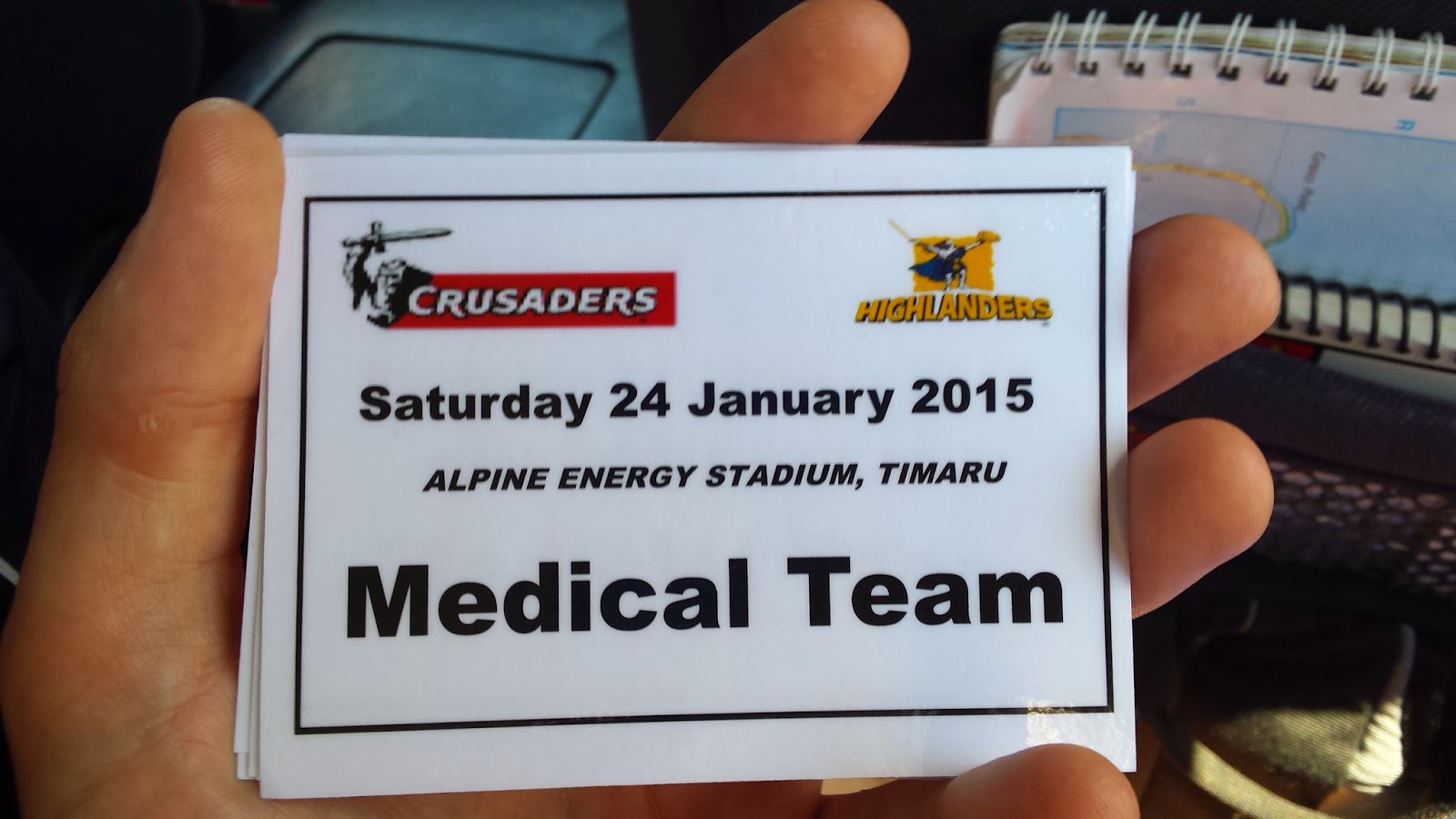
I was privileged to be on the medical team at the Canterbury vs Highlanders pre-season game. I worked alongside the team doctors and even featured on the national tv news!

I'm the guy in the blue top, track pants rolled up & looking after the gas.

&


I was also privileged to be a sport medic at the 2015 Under20s Ice Hockey World Championship!


I have continued to dabble in photography... even putting together a quick website: