Tuesday, 11 August 2015

Y3S2W6: Hokey Pokey


"You do the Hokey Pokey and you turn yourself around, that's what it's all about"
...and you thought I was going to talk about Hokey Pokey ice cream, right?!

On Wednesday we gave our group presentations. My group presented a community exercise and education programme for peripheral vascular disease to the class. This was a topic I knew a lot about (having covered it in a presentation in my BPhEd degree) so I was able to cover exercise prescription and management without much preparation or any cue cards. The exercise component included a choreographed 'Hokey Pokey' in which the audience (and assessor) joined in ... good fun! 

Other groups, with other topics, pulled out equally interactive and informative presentations... and put the hard work in as not to rely on cue cards!! The asthma group presentation had us breathing through straws then playing games like 'tag' - mainly because there is a high incidence of asthma in school aged persons... check out 'Jump Jam' on youtube to see how primary children can integrate dance and exercise. The COPD presentation was targeted to the elderly, so naturally we sat in a giant circle and done a chair aerobic warm-up, then kick many small Swiss-balls around the group circle. This was followed by exercising our upper limbs in the same way with balloons. The diabetes outreach team invited to the local Marae looked to incorporate Maori culture, and had choreographed a couple of upbeat songs for an aerobic exercise session; "Shake it off - Taylor Swift", and "Jump - Van Halen". I heard that another lab group on diabetes introduced themselves with a Mihi. The cardiac rehabilitation group had a focus on transitioning patients from a phase II to phase III programme. Many groups gave out 'home-made' information brochures. All the groups had a slightly different interaction between presenters which made it very entertaining - some gave a patient interview demo whilst others treated the audience as the targeted audience that we were suppose to be.

Integrated Studies focused on connective tissue conditions like fibromyalgia, rheumatoid arthritis, ankylosing spondylosis and gout. In the first lab, we were given the diagnostic criteria, practised evaluating xrays, and physical assessments of these conditions (n.b. xrays won't pick up on fibromyalgia... obviously). It also required us to think how we would adapt our MSK consultation for a patient with osteoarthritis and/or rheumatoid arthritis going in for a full hip replacement in two days time! For the second lab, we had a middle aged person come in so our year group could interview them and find out about how ankylosing spondylosis was diagnosed and what it is like living with it (they have ankylosing spondylosis). It was mentioned that their first port of call was a physio, and that physio didn't pick up on the condition (and neither did the chiropractor whom they saw after a year of non-improving symptoms)... rather it was an osteopath that referred the patient for an xray. I'm not sure whether Osteos refer most people for xrays, but I'm pleased the condition was diagnosed so it could be appropriately treated! Ankylosing spondylosis is a disabling condition, and when medically treated can put the patient back to near 100% functional, pain-free living!

Required readings are usually articles or book chapters that we are REQUIRED to read (they are usually associated with a lecture or lab)... it is expected that we know the content in these texts. Anyway, reading these is usually a mundane task. Occasionally we will be required to read an article that strikes us as interesting or enjoyable to read. One article (that may have been last weeks required reading... don't stress, we'll have a one week break soon for catching up) that was strikingly good to read was: 
'Pryor, J. A. (1999). Physiotherapy for airway clearance in adults. European Respiratory Journal, 14, 1418-1424'
Confession: I don't usually read articles from beginning (intro) to end (conclusion) - usually it's the abstract followed by the discussion that I read first... followed by whatever section in a jumbled order has the info I'm looking for. This probably isn't good practice - but it's proven to be time efficient. However, this text gave a historical background on physiotherapy / respiratory therapy in the introduction, something that struck my attention before I had a chance to skim-scroll-down (a.k.a "eyeing up") the document. So this is one of the few articles I have read from start to finish (from intro to conclusion). Here is a brief bullet-pointed outline of the origins / development of documented respiratory therapy adapted from Pryor (1999).
  • An Assyrian text instructed that a condition characterised by 'fits of hissing coughs, murmuring wind-pipes, and phlegm' be treated by 'braying together roses and mustard in purified oil, then drop some on patients tongue and blow some into his nose'... then "he shall drink several times beer of the finest quality; thus he will recover".
  • 1898: The 'intermittent' then (1901) 'continuous' postural [drainage] method was described for bronchiectasis.
  • 1915: Soldiers with lung injuries were given 'exercise' and taught forced expiratory techniques.
  • 1953: Vibration and percussion techniques were added to postural methods.
  • Post-1960s new technologies emerged from around the world, and have been adapted by others since.
    • Belgium's 'Autogenic Drainage'
    • New Zealand's 'Active Cycle of Breathing Techniques'
    • Denmark's 'Positive Expiratory Pressure'
    • Switzerland's 'Flutter'
    • USA's 'Incentive Spirometry' & "frog breathing / Glossopharyngeal Breathing"
"We've got to die of something, eventually". On Thursday morning we had a lecture from a cardiothoracic surgeon working at Dunedin Hospital. Although there was very little relevance to physiotherapy, we got a good history about the development of surgeons, the problem solving and chaos they were faced with. Apparently Henry VIII empowered barbers 'barber-surgeons' (yes, the people that shave man's face and cut hair) to perform surgeries... mainly because they had sharp knives/blades. Historically, problem solving was related to sterilisation, keeping the lungs inflated, anaesthetic, and there was a belief for some time that if you touched the heart it would go in to fibrillation (it would have been very hard to operate on the heart without touching it!!). The surgeon described their role (general procedures for various conditions and materials i.e. heart valves) when repairing the plumbing or heart components. 

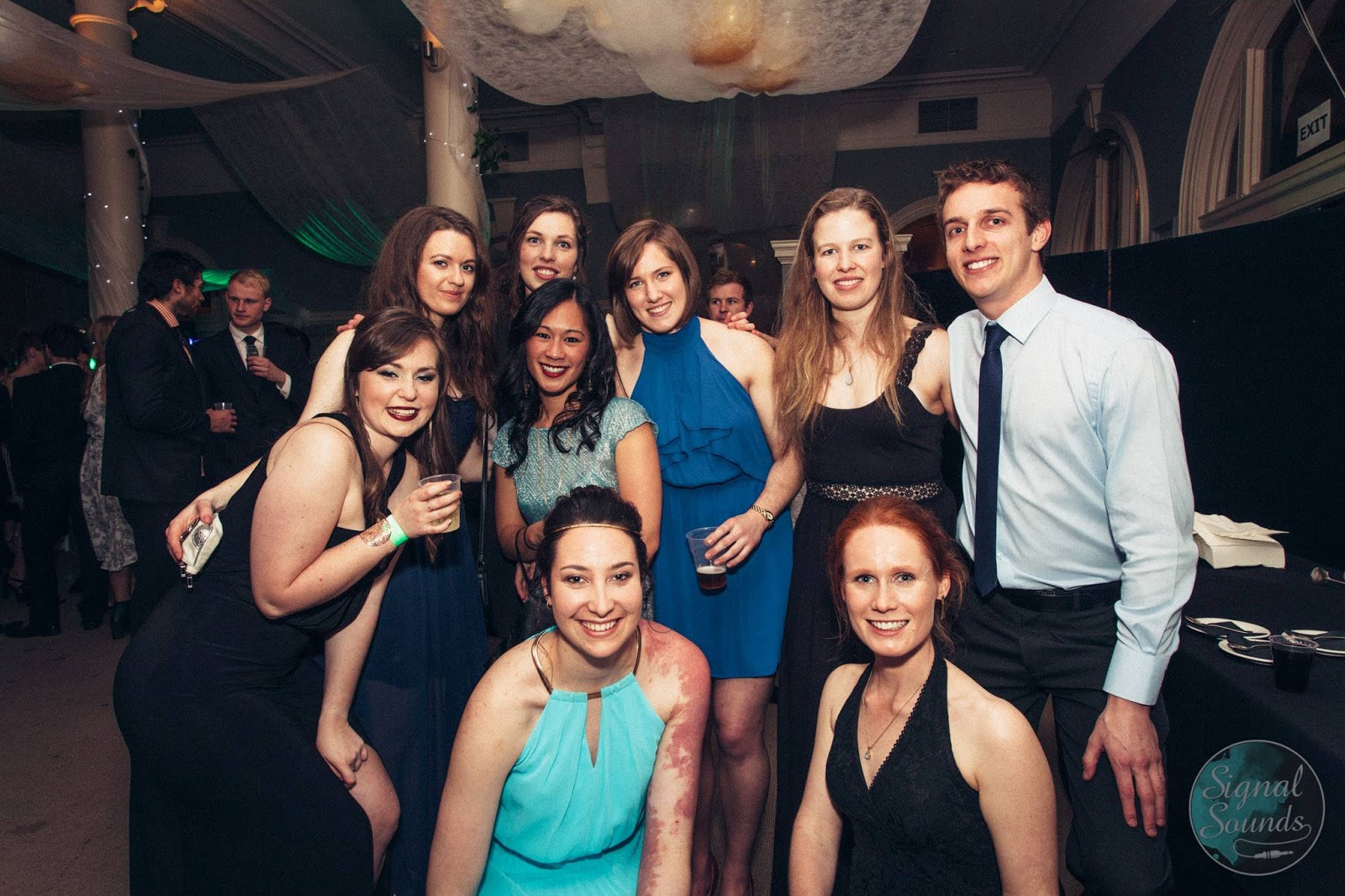
On Saturday we had the Physio Ball. There were a couple of pre-ball gatherings, with good food and great company. It was raining, but that didn't put a damper on the evening!


The ball itself was set at Dunedin's iconic railway station. There was a lot of work put into setting up the ball room to make it look Grecian (big thank you to the ball committee). The ball had everything: food & drink, live artists, DJ, lights, cameras, dancing. Photo-wise there was a photography guy who stayed around the dance floor, and a dedicated Grecian scene group photo area - with props n' all!  


Wednesday, 5 August 2015

Y3S2W5: Hands Up

Last Friday we were given our preliminary fourth year placement locations. I'll keep you all in suspense as to where I'll be placed. I created a quick graphic showing where AUT send their fourth year students versus where UoO send their fourth year students. (My artistry is at a 'stick-man' level, so bear with it!). Pleased note that I've likened the students of both schools to superheroes (and not making one a villain)... However, I'm pretty sure Yoda would beat Superman if they were to clash over a turf (clinic) war... 


Hand therapy was the theme of Integrated Studies this week. We had a guest lecturer Hand Therapist take two lectures. The first lecture was pretty gruesome (awesome)! We saw hands that had been chopped, crushed, burned, broken, congenitally deformed, post surgery, missing skin... we were impressed to learn about the intricate work that a hand therapist can do to facilitate healing of the hand. We were reminded of the complex anatomy of the hand and forearm then given skills to differentially diagnose the involvement of different structures. The lab associated with this theme had us measuring pinch strength, sensation testing with filaments (it reminded me of fishing line of different diameters), STI testing (Shape, Texture, Identification test... nb. physios don't do sexual health screening), palpating structures (bones, ligaments etc), differentiating between extrinsic and intrinsic muscle stiffness (i.e. lumbricals), muscle testing (very specific!!), reducing a finger dislocation, and differential diagnosing (tennis elbow, radial tunnel syndrome, posterior interosseous nerve syndrome) and treating conditions of the upper limb such as Mullet Finger & swan necking.

Hand Therapy is NOT Palmistry
One of our lab demonstrators for a hand therapy lab suggested the following book was a 'bible'... so I've added it to my growing physio library of books (and ebooks).

The CVP lecture and lab looked at physio interventions for respiratory disorders: breathing control techniques, relaxation positions, postural and autogenic drainage, flutter/acapella and PEP (positive expiratory pressure), percussion/vibration. We also looked at inhalers, spacers, nebulisers and oxygen therapy devices.


Cultural competence lab had us reflecting on our prejudices, culture and building rapport by talking about our ancestry/family history and ties to regions of the world/NZ as is the cultural norm with Maori greetings (rather than introducing ourselves and getting straight to the point of what brings them in to the clinic).

In social events this week, we had an inter-faculty quiz night on Thursday and a piss-up on Friday!


Coming up next week is the annual physio ball!

***

 I spent some time browsing around the internet for more physio memes!  
I'm definitely blurring the line between good humour and poor taste with a few of these.


Hopefully you got a chuckle from a few of those!

Wednesday, 29 July 2015

Y3S2W4: Language

Nau katoa
(Welcome everyone) 

Ko te wiki o te reo Māori
(It's Maori language week)

  He reo Māori tōu? 
(Do you speak Maori?)

 Because we're celebrating the Maori language this week in New Zealand, I thought it would be appropriate to get on google translate and translate some common physio instructions or techniques. If google translate is incorrect, please let me know!

 Relax = wātea
Breathe = whakangā
 Massage = romiromi
Exercise = mahi
Pain = mamae
Good effort = kaha pai
How did that feel? = Te aha i ite?
We were expressing language in other ways this week too... such as motivational interviewing and testing cranial nerve function.

The motivational interviewing lab for 355 on Monday was good fun. We were given the challenge of motivating our peers to change their identified health behaviour ambivalence. These were personal health problems so it was important to practice being non-judgemental / acceptance and confidentiality. Throughout the interview we could only use reflective statements and occasionally open questions. Open questions are helpful when your reflective statement closes the conversation down. The idea is for the patient to solve their own problems - we could not offer any solutions because patients are more likely to act on their own solutions than that of another person. Here are some examples the class done together before being split into peers to change our personal health problems - have a think about what you would say and you'll see that it's not an easy exercise.
  • Patient: I know you want me to exercise and I can see it would be good but it's just not me.
  • Physio: Exercise is something you don't currently do, but you can see how it would be good for you? How do you think exercise would be of benefit to you?
And
  • Patient: I have been thinking about walking but I wouldn't like to push it, I've just had a heart attack you know.
  • Physio: So you've been thinking about being more physically active but you're scared that you'll hurt your heart if you do become more physically active. What physical activities have you been thinking you could do?
 Here is how you might shut the conversation down... then save yourself with an open question.
  • Patient: I've been wanting to go swimming but I don't have time to get to the pool.
  • Physio: The time it takes you to get to the pool is the biggest barrier to going swimming
  • Patient: Yes.
  • Physio: Okay... What about the 'time it takes you to get to the pool' is your biggest barrier?

The first lab of integrated studies had us screening case studies for red flags (and risk assessments) specifically for vertebral artery and carotid artery deficiency. Part of the lab involved checking cranial nerves 7, 9/10, 11 and 12 integrity on our peers. We were watching for different things: symmetry, weakness and air leaking sounds. Needless to say, we had a good laugh at making each other wriggle their tongues, looking down to their throat while they made noises and asking them to repeat funny sounds. Here's what we did:
  • Cranial nerve 7: have the patient say "pa, pa, pa".
  • Cranial nerve 9/10: have the patient say "ka, ka, ka" then wriggle their tongue in and out and side to side, then have them tilt their head back and say "ahhhhhh...".
  • Cranial nerve 11: resisted muscle tests for upper trapezius & sternocleidomastoid.
  • Cranial nerve 12: have the patient say "la, la, la".

The second lab of integrated studies focused on Sport Physiotherapy and acute care management... mainly acute care management. We were reminded about Ottawa rules for ankle and knee, and the Canadian C-Spine rule for the neck - these rules guide referral of the patient for an xray. We had a few situations to work through such as testing chronic versus acute compartment syndrome of the leg and involvement of fracture and haematoma. We looked at multiple methods for reducing a shoulder dislocation and how we might teach somebody to reduce their own shoulder dislocation.

Cardiorespiratory labs allowed us to reassess our patients (peers) and then hand in two assignments (patient assessment and spirometry assignment). We've got two presentations to focus on now, for me that's SNAGs for neck stiffness, and a group presentation about peripheral vascular disease.

Poroporoaki hoki inaianei
(Goodbye for now)


Wednesday, 22 July 2015

Y3S2W3: Follow Up

By now you will have realised that most MSK physio clinics look the same: plinth, chair, anatomy posters, a few joint models, hand sanitiser - those sorts of things. It is a nice reminder that physiotherapy is a career that can be done with our head, heart and hands. We don't need too many fancy machines or products to do a good job. Nothing beats a good massage, joint mobilisation and exercise! This is one reason why I think MSK physiotherapy is so cool. Unfortunately this is the last week of my MSK placement. On Monday I got to sit back and type up my peer's notes as they were going through their objective assessment - my note taking abbreviations are coming along nicely. I got to have a follow up with one of my clients on Wednesday (other client cancelled due to feeling unwell) - this was my client with neck stiffness. Just so you know, as an abbreviation, F/U is 'follow up', and is not to be interpreted as anything else. My SNAG treatment for this patient's neck had been effective for many days post treatment, but the client felt that there was some tightness creeping back in. After a follow-up assessment I performed some more SNAGS, massage for upper traps/levator scap and taught this client how to self-SNAG using a tea towel. Although my placement ended this week, the client  will have another follow up next week with the clinical supervisor. Great MSK placement!! P.s On Friday we were shown another manip for Cx-Tx junction, this one was a rotational rather than a PA thrust. In addition we were shown manips for the cuboid and navicular bones of the feet!!
Muppets' shouldn't manip...
Five reasons why MSK physiotherapy is awesome.
  1. There would be quite a few occupations out there that don't have the luxury of working in a warm environment everyday! Physiotherapy is not one of these! We get to walk into warm clinics at the beginning of the day and stay there all day if we choose to - how's that for beating the winter blues?!
  2. Some occupations get to drive 10 tonne diggers... we're almost that awesome! We get to play with and show people our toy knee joints and spines. Although it's not quite a Toy Story, these models are entertaining and go 'walk about' now and then - mainly because we forget to put them back after using them to educate a patient.
  3. Hands of god! Oh, are you having trouble turning your head over your left shoulder? Well let me fix that for you and tell you about my powers of science. Physio's can't always 'fix' things or find replacements for worn out faulty parts, but we can help you make the most of what you've got... and occasionally, we fix things too.
  4. It is possible to do voodoo... sort of. There are dry needling courses for physiotherapists', but instead of spiritual-physical parallels between a doll and the victim, physio's get to stick the needles directly in our patients (who have given consent). We practice good healthcare, so there is no bad voodoo - instead there is only triggerpoint-undo doo! On a similar note, we can also clothe people in enough tape that even the ancient Egyptians and their mommies would be proud.
  5. How many people can wake up, get out of bed and go to work, pull up a blanket and type notes on a bed (plinth) if they're free from client-contact? Not many! How many people can kick their shoes off at morning tea break with a coffee and lay back on a make-shift beach chair (plinth)? Not many! Yes, a plinth is not only for the patient, it's a vital part of the awesome MSK physio lifestyle.


The MSK assessment is made up of a series of games:
  • Subjective assessment = Cluedo & Charades: piecing together a story to find the location, weapon, and suspects (Cluedo), whilst observing body language (Charades).
  • Posture analysis = Spot the difference: draw an imaginary line down the spine and note the difference.
  • Active RoM = Simon Says: have your client move to your instruction.
  • Special Tests = Guess who? Who isn't the cause of the pain... does your pain wear glasses (have a positive Speeds test)? No, cool - I can ignore all sources of symptoms that are wearing glasses (come with impingement or the biceps brachialis).
  • Palpation = Tiddlywinks: press through the muscle (counter), find a spot that is familiar pain for the patient (makes the counter jump). 
The two labs for Integrated Studies were game-like too. The first was differentiating (subjectively and with special tests) between peripheral nerve symptoms, radiculopathy and myelopathy. The second related to a McKenzie method diagnosing - this was an exceptionally fun lab. We worked in pairs to diagnose 12 case studies, with four minutes for each case. Cases were presented on a McKenzie Institute cervical spine assessment form. Some diagnoses included: reducible and non-reducible (e.g. cervical radiculopathy) derangements, dysfunction syndrome, posture syndrome, chronic pain, osteoporosis (compression fracture), ankylosing spondylitis, space occupying lesion, meningitis (we weren't given fever or rash as a symptom), mechanical vs non-mechanical headache.

Cardiorespiratory lectures & lab had us back to interpreting x-ray imaging, revisiting COPD management strategies, and learning new performance and outcome measures such as the 10m incremental shuttle walk test (10mSWT), arm ergometer protocols, physiological cost index (PCI) and 'Chronic Respiratory Disease Questionnaire for Quality of Life'.

We've got two presentations to add to our assignment list. One is an individual presentation about a clinical technique relating to our last placement (I'm picking Mulligan's SNAGs) and the other is a group presentation about a cardiovascular condition as it pertains to physiotherapy (my group has Peripheral Vascular Disease). Looking at the current research report on spirometry (data taken from my lab group), it looks as though respiratory measurements (spirometry) should be taken in standing... but I'm sure it will depend on the patient. Below is a table with interesting info. The p-value with '*' next to the number indicates that the Paired T-Test (a relevant statistical test for the research design) are significant - this means that we can be 95% sure that there is a difference between the two means (standing spirometry versus supine spirometry measures). The reduced measures in supine may reflect a displacement in abdominal content, reducing the action of the diaphragm on inspiration - which when contracted pushes against a higher abdominal pressure in supine lying.
Comparing lab group means for spirometry measures taken in standing or supine lying. 

To be fair, I used the free statistics programme 'R-statistics' to calculate most of this... it's not an interface-friendly software - but it's super powerful. Here's a snapshot of how the software R looks with my data put in (and some added commentary at the bottom so I knew what the info meant)!

Yay, statistics!!

Fourth year placement preference forms should be submitted by now.
This Sunday I've got a discounted First Aid refresher course - organised by the student exec.

Friday, 17 July 2015

Y3S2W2: Carpe Diem


Week two of MSK placement at Unipol Recreation Centre saw a gradual increase in clients. In between we practised our cervical up-thrust and down-thrust manipulations. We were also taught another manipulation technique for the Cx-Tx junction - I'm not sure what the technique name is. This technique is similar to a 'Full Nelson' in terms of the patient positioning (upright or sitting, with hands behind their head) but different in that it is more of a PA (posterior-anterior) manip than a distraction manip. We were taught two manual handing skills to achieve the same outcome (hands behind head or across their chest). Our clinical educator suggested we could try slamming doors (I'm sure we've all experienced a door that doesn't latch properly when closed) as a good way to get the feel of what a manip should be like - interesting analogy...

So the manipulation techniques we've learned in the BPhty degree so far are: the million dollar roll (lumbar manip), pistol grip manip (with various spinal loading techniques), screw manip (with emphasis on both PA and gaping the facet joint and including a unilateral costovertebral joint manip), the Cx-Tx manip (x2 manual handling set-ups, mentioned above) and the up-slope and down-slope manip for lower cervical spine. Now that's a whole lot of manip!! Just some more peripheral joint manips to learn and we'll be chiropractors (joking, of course!!)

In other Unipol placement news, I got to assess my first MSK patient. Somebody scheduled the client in for 8:30am, and I just happened to be half an hour early!! How's that for early bird gets the worm?! So this was MY first client at this placement to assess and treat from start to finish. The client had suspected ankle sprain (having cleared a broken bone out earlier in the week with a visit to ED). However, my subjective and objective findings indicated a stress injury of the distal 1/3 fibula. Interesting! My second patient on Friday was challenging because she was vague when providing the details that mattered - the onus was really on me to probe and control the conversation (and to be fair, I could have done a better job given the time available). I treated the patient's neck stiffness with a SNAG or two (or 10 to each side), and she could turn her head fully without stiffness - great!! I'll be seeing both patients again next week. I got to observe other clients with interesting presentations too. One patient that really sticks out [pun] had an acromioclavicular reattachment surgery - this patient had his AC reattached with part of a tendon from his hamstring. When the patient horizontally flexed his arm, we could see the clavicle ride up, to form a prominent step deformation, on his shoulder (... and this is after surgery, imagine what it would have looked like before surgery!!)

There was another opportunity for students to be involved in promoting the school, this time it was in semi-staged scenes to be recorded and edited into a television commercial. I volunteered and got to play the role of a student physiotherapist (I'm sure you were expecting that). The video crew aim to capture the culture and learning environments in which the physio students are in on a daily basis, such as practical skill labs, the School of Physio clinic, and at Dunedin Hospital. There were also a few short interviews with some second year students. I certainly had a good laugh playing my role which might be shown as snippets of a MSK physio consultation. The original plan was to assess a patient's ankle (it was legitimately in need of rehab) however during the mock-subjective the 'patient' flicked her hair (or something) and then we changed to assessing the cervical and thoracic spine. It was all a bit of fun, and because there was no sound recorded I could say almost whatever I wanted.... sort of. Anyway, we won't know what edits or which scenes actually make the final cut... but I'm sure many of the physio student's will have acting careers ahead of them should they choose the celebrity life. I'll attempt to add the advertisement to my blog when it is released.

Pedometer assignment... so last week I mentioned that we're recording our steps over the week with a pedometer. As you'd expect, there had to be an associated assignment - there was! This is a very small (and easy) lab report to be done in groups - the usual format: intro, method, results, discussion, conclusion, references. Here's a quick graph to show you how I got on. It looks as though there might be a trend, but I assure you there isn't - data can be very misleading.

During the cardiorespiratory lab, I thought I had beaten the system by blowing my spirometry readings off the chart (literally). What usually happens in a spirometry test (using old - manual machines) is the patient blows out as fast as they can for as long as they can, and the needle tracks the volume blown per minute. In my case, the piece of recording paper wasn't long enough (huge lung capacity, right? Unfortunately not). We decided the machine was probably at fault, so a digital spirometer was used. I recorded an above average result, but it wasn't super human or anything - I'm blaming fatigue after performing the test so many times.


Current assignments on the go:
-  EBP assignment.
-  Pedometer scientific report (groups)
-  Cardioresp patient goals / exercise programme
-  Cardioresp spirometry scientific report

Here's an interesting website about three strategies to trick your brain into coping with chronic pain: http://www.gradedmotorimagery.com/

The physio ball is coming up on August 15th and I've purchased a ticket! The theme is Grecian. I'm not sure whether that means we will dress with a single leaf covering our unmentionables, as Greek gods, in togas, like somebody from the movie 'Greece', as though our country is in a financial crisis, or to just go with a suit and tie.


Yes, that's right - it's Mrs Physio time again. I decided I would actually go to this event this year too to see what all the fuss is about. Here's a recap about Mrs Physio. It's a cross-dressing pageant, like Mrs Universe. Second years enter and compete across different sections: catwalk, interview, bikini model, and talent show. The student exec invite an honorary panel of lecturers to judge each section. Overall it's a pretty funny evening, well worth going to or entering (if you're brave enough). I've blurred the faces of the contestants and judges to preserve their dignities - can't have patients know that their future physio sung in a bikini or played the bagpipes whilst pretending to vacuum using their thighs. 


There are other groups that organise events within the student physio umbrella, such as the Physio Christian Group. I attended one of their activities prior to Mrs Physio... we went to a local business called 'Leap'. Basically it's trampoline heaven. 


 With a lot going on this week, we had to seize each day for all its worth!