Thursday, 3 September 2015

Y3S2W8: Chest physio & womens health.

This week was the start of my final placement for the year - 7th floor at Dunedin Public Hospital (cardiorespiratory). The weather was a little bit drizzly, so there was a clear trail of wet footprints on the carpet to follow as I walked through the front entrance to the hospital at 8:45am. A potent aroma of coffee greeted me, and I wasn't surprised to see a number of staff and patient's family cuing for this elixir. On the elevator, waiting areas and on the wards themselves, the hospital is generally a quiet place... until you listen more carefully then you hear the murmur of healthcare, patients and families - it's like the walls of the hospital breathing, but we shouldn't listen too hard. On the 7th floor we have a very small cupboard to store our personal items, then we're drawn to the nurses station - the morning begins. We receive a patient case file, decrypt the previous notes (not only are some people's handwriting illegible, but there are new abbreviations) and decide what our role is with this patient today. The pace in the hospital is not very fast, thus it's not at all like a MSK placement (which resembles speed dating in comparison). CVP requires you to give the patient time, and of course many of the other staff will be in line to visit your patient too. Then there's the unpredictability of the patient - their condition is usually less stable and if the physio is scheduled to see them but they have a hypoglycaemic episode, their family arrives, etc, then it becomes a juggling act towards the end of the day. We need not worry though, because provided they don't check themselves out then we'll see them the next day (or monitor them as needed). Another difference between MSK and CVP is the day/date awareness. MSK people are very aware of what day of the week it is, but often are unaware what the date is (you discover this when the patient fills in forms or when rebooking) - however, in hospital the date no longer matters and patient's start getting the day of the week mixed up! This is fair enough too because everyday must be the same for patients' in the hospital.

On day one (Monday) of placement three other peers and our educator introduced the placement with a discussion about our online case study and the wiki that we completed. Afterwards, we worked in pairs to treat our patients with a modest amount of supervision from our clinical educator. The main case I worked with on Monday was a man ready for discharge. We assessed his walking ability on the flat and with stairs and deemed him fit to return to his home. There are commodes at the hospital which can be used for transporting patients - I got to drive this to the orthopaedic gym on 4th floor with the patient in it... it turns out that it's a rear wheel turning chair, which means that we have to drift the chair around corners. Drifting chairs around the hospital sounds like fun, but we had to remember that crashing wasn't an option (they're not easy to steer) and my patient was >80years of age (I'm sure he wouldn't have enjoyed this).

On day two (Wednesday) I got to see a patient with idiopathic pulmonary fibrosis. The poor patient had an acute infection affecting the right lung, more than the left... as a part of our subjective/objective/treatment we needed to auscultate. We heard fine crackling in basal area of his left lobe with end inspiration, and throughout the breathing cycle and evenly distributed through the right lung - interesting! We were invited to have a look at an xray of another patient who had had a complete right lung pneumothorax... apparently the person had put up with what they thought was an exacerbation of asthma - ha!

On day three (Friday), I got to see a patient two days post CABG - he was still in phase one of the road to recovery plan. In this phase, the physio will assess his respiratory health (our patient had pneumonia a few weeks before his surgery), after treating his lungs (with breathing techniques) we mobilised him from one chair to another chair about two metres away. Our patient was a little bit unstead on his feet, so we decided that was enough exercise at the time. The physio will visit him over the weekend to help him continue clearing secretions effectively and mobilising him a bit further. The second patient I saw required a pre-op consultation with a physio (heart valve replacement) - so we got to do this without our supervisors attendance. We discussed his living situation, physical capacity and goals following treatment, then taught him the breathing techniques and educated him about the post-op plan (from a physio perspective) i.e. lung health, gradual mobilisation/walking, advise about wound care (bracing the chest when huffing), and lifting precautions.

CVP focused on physiotherapy for managing a patient pre- and post-operatively from surgery on their chest or abdomen. Key points to note were the management of patients presenting with restrictive versus obstructive chest conditions and the effect of incision location on our rehabilitation plan. The lab put this knowledge into action and we completed case studies, practised physio-patient interaction with some techniques. The School of Physio has a few full body manikins, and the manikin working with us today was Heartly. He wasn't looking to good (or feeling too good either... lightheaded due to low BP etc), with a chest drain in his pleural cavity following a lobectomy and nasal prongs to improve his oxygen saturation. It was our job to safely get Heartly out of bed and into a chair. During the lab we got to have a play with incentive spirometry, mainly because it is useful for people with a restrictive lung presentation, such as many people after chest surgery. Incentive spirometry requires the patient to breath in with enough suction to lift a ball off the bottom of a container - the ease of this can be changed via a dial on the device.

Incentive Spirometry 10s challenge.

The Integrated Studies theme of the week was Womens Health. We covered the role of physiotherapy through pregnancy (antenatal and post-natal care) including appropriate exercises for abdominals and pelvic floor, as well as strategies to assess and reduce posterior pelvic pain. We discussed postural strategies for minimising low back pain during pregnancy too. On the note of pelvic floor training, we investigated the high level evidence for reducing stress and urge incontinence and prolapse too. We were lucky to have a physiotherapist who is a specialist in Women's Health during labs and lectures. In the lab we got to lay around on mats (or plinths) and practice abdominal and pelvic floor training - good fun! And, hear about pregnancy education (using a pregnancy atlas) - not so much fun, especially for the pregnant ladies out there! Oh, and we got to see our classmate's bladder and abdominals with an ultrasound imaging device!


PHTY355 lecture was about running our own private practice. After listening to the business talk I left the lecture thinking that I'd like to focus my future of physio on health rather than earning big money through owning my own business.

Saturday, 29 August 2015

Y3S2: Mid-Semester Break-ing Bad.


"The burden of research" pertains to the participants in the research. Occasionally minority groups are subject to research participation more than other groups, and this can be seen as a burden on these groups... but over the break, I  felt there was a burden on us to transcribe the interview because it takes a very long time to transcribe an hour and a half of interview! Luckily we could split transcribing the interview up within our group.

From the interview transcript (see last weeks blog post for info on what I'm talking about) there are two assignments.
  • The first is a group assignment where we discuss the meaning of 'quality of life' and 'empowerment' for the volunteer that we interviewed, then to discuss the role of the physio in maintaining functionality and wellness (based on volunteers experience). In addition, we hand in the questionnaires and interview transcript with it.
  • The second assignment... well... I can't remember where the instructions for it are...

I was up Signal Hill, which looks over Dunedin and the harbour, for sunrise on Sunday.
Sunday was then spent at the Sport Injury Clinic for there was a year 9/10 netball tournament which had athletes from Christchurch to Invercargill competing. It was quiet on the injury front, leaving only three knees and two ankles to strap between 9am and 3:30pm... again, it was a quiet day in the clinic.


I'm on placement next week at Dunedin Hospital. I'll be up on the 7th floor (ward 7A: respiratory, and ward 7B: coronary care). The placement description suggests we will be seeing inpatients whom have had elective or emergency cardiothoracic surgery, and respiratory conditions (COPD, pneumonia, cystic fibrosis etc). In preparation for this placement we have to complete a small online wiki and group case study... so I done that over the break. We were also asked to do some reading around anaesthesia, cardiac and respiratory conditions to refresh our memories and to help us with our line of subjective assessment (questioning) for these patients.


The University of Otago, and School of Physiotherapy have scholarships available for third year undergraduate physio students. One of the scholarships currently open for applications is the 'Sheila Consuela MacDiarmid Scholarship' valued at $1500 to be awarded to a student with an interest in further studies in the MSK area (with a strong academic and a developing professional standing). Sheila was a graduate of the Dunedin School of Massage in 1928 (now School of Physiotherapy) whom had a particular interest in orthopaedic work. I decided to have a quick search about Sheila, and discovered that she was a registered physio in the same year that she graduated (nb. the first physiotherapist to registrar in NZ was in 1921). I couldn't find any more info than that with a quick Google search. Anyway, I will add my application to the mix and hope to get an interview (the second part of the application process).

By now you'll realise that I enjoy the challenge of finding new spots to capture the Southern Lights (Aurora Australis) around Dunedin. Over the break there was a big display that was unfortunately washed out by a full moon. I still joined the chase and captured a small glow (which would have looked magnificent if it weren't for the moon). 

Aurora Australis, Waldronville (South of Dunedin)


Tuesday, 18 August 2015

Y3S2W7: Public Speaking

It was my birthday on Monday, and again my kind hearted peers wished me a wonderful day and signed a card. They're too good!

Even at work, the team put on a morning tea, a happy birthday sign behind the reception desk and a card! Spoilt!


So what else happened on Monday? Well, we had two public speakers. Both of whom work at the Dunedin public hospital. The first was an anaesthetist. He described his how the anaesthetist developed from its historical roots, as well as his role at the hospital, making it clear that they do more than the stereotypical lounging around drinking coffee, listening to music, doing cross-words whilst the surgeons are at work. We got a brief insight as to the role of physiotherapy before or after surgery too. The second speaker was a sports physician who discussed conditions of the athletes heart, such as cardiomegalopathy and Spontaneous death syndrome / Sudden arrhythmic cardiac death syndrome. He also touched upon drugs in sport. Both speakers were exceptionally entertaining!

This is the week of our CVP community visits - interviewing people with chronic conditions about empowerment & quality of life in their own home. This meant that, in groups of three or four, we were off on very short road trips (some longer than others) around Dunedin to learn about a client's life, living with a condition(s). My group had organised Tuesday afternoon to visit our client. Each person in the group had a task, whether it be the leader, driver/navigator, QoL questionnaire researcher. I was fortunate enough to be the driver and lead the interview process for an hour an a half... as this interview is a key component of our next two assignments, somebody will need to transcribe the conversation word for word!


On Tuesday evening I was asked to medic Dunedin Technical Football premier lad's game against University. Having not been their sport medic this year (three second year physio students / sport medics have been looking after them) I arrived at the changing room to an almighty cheer - they must have missed me. By the end of the match they were joking that I was their lucky charm. Dunedin Tech won 16 - nil... what a slaughtering. My understanding is that this score margin is the record for the season so far. Well done lads! Dunedin Tech are currently second on the table, behind Caversham (same as in 2014).

Dunedin Tech (while/maroon) vs University (yellow/blue)

This was also the week of our clinical presentations. These presentations were about a case we were involved with or a condition/treatment/assessment procedure(s). For my presentation I attempted to emphasise the role of clinical reasoning and evidence based practice (literature, client preference, clinician expertise) by making use of a case I treated whilst on Unipol (MSK) placement. The case was a stiff neck with end of range pain (left rotation and side flexion) and I described how I went about choosing the best manual therapy technique (this happened to be Mulligan's SNAGs). Then, to finish I was going to elaborate on the technique and demonstrate it. However, following on from last weeks foolish 'no prep for the presentation' approach I rambled (probably quite poorly) through the allocated time and had to wrap up halfway through my powerpoint presentation... I didn't use any cue cards, didn't have a speech memorised, it was all purely off the cuff... not recommended. Others who had prepared well gave superb presentations!

There is a growing group of physio students who are keen to improve their photography skills, so on Wednesday night some of us made a trip to capture the night sky - I was on a mission to take a star-trail picture... here's what I came up with. The orange glow is from Dunedin city lights.

Papanui Inlet, looking toward Dunedin

Thursday was fairly eventful too. Our 8am lecturer was a physician at Dunedin Hospital who was involved with emergency ischaemic heart attacks. We got the overview from the paramedic to hospital interventions and soon came to realise that living in a remote place at the time of bad weather was not advantageous to minimising heart damage (or mortality) - many hours waiting for the rescue helicopter, then a return waiting time as you're flown back to hospital.

The 8am lecture was followed by a sitting in on more PHTY355 clinical presentations. From the presentations I've had a good reminder about MSK management for sore backs, necks, shoulders... some neuro balance stuff and today I heard about the student experience on the orthopaedic ward - especially the physio role in perioperative abdominal surgery. The following lecture was on patient rights in research - this all made good sense. Finally, our Integrated Studies lab in the afternoon was an eye-opener! The theme for Integrated Studies was phantom sensations, phantom pain and amputation. We were practising our amputee stump bandaging skills on models then had the opportunity to hear from an amputee - yes that's right, another guest speaker! This person had lost their hand in a workplace accident. They brought in their prostheses which included the classic 'Hook' (think Peter Pan) and a $100,000 bionic hand... yes, we got to play with the bionic hand!!

Current assignments on the go:
- Group and individual qualitative-based assignments from the info we collected during the home visit. I'll tell you more about these next week.

... Half the semester gone!! Off on a one week (mid-semester) break next week!

Tuesday, 11 August 2015

Y3S2W6: Hokey Pokey


"You do the Hokey Pokey and you turn yourself around, that's what it's all about"
...and you thought I was going to talk about Hokey Pokey ice cream, right?!

On Wednesday we gave our group presentations. My group presented a community exercise and education programme for peripheral vascular disease to the class. This was a topic I knew a lot about (having covered it in a presentation in my BPhEd degree) so I was able to cover exercise prescription and management without much preparation or any cue cards. The exercise component included a choreographed 'Hokey Pokey' in which the audience (and assessor) joined in ... good fun! 

Other groups, with other topics, pulled out equally interactive and informative presentations... and put the hard work in as not to rely on cue cards!! The asthma group presentation had us breathing through straws then playing games like 'tag' - mainly because there is a high incidence of asthma in school aged persons... check out 'Jump Jam' on youtube to see how primary children can integrate dance and exercise. The COPD presentation was targeted to the elderly, so naturally we sat in a giant circle and done a chair aerobic warm-up, then kick many small Swiss-balls around the group circle. This was followed by exercising our upper limbs in the same way with balloons. The diabetes outreach team invited to the local Marae looked to incorporate Maori culture, and had choreographed a couple of upbeat songs for an aerobic exercise session; "Shake it off - Taylor Swift", and "Jump - Van Halen". I heard that another lab group on diabetes introduced themselves with a Mihi. The cardiac rehabilitation group had a focus on transitioning patients from a phase II to phase III programme. Many groups gave out 'home-made' information brochures. All the groups had a slightly different interaction between presenters which made it very entertaining - some gave a patient interview demo whilst others treated the audience as the targeted audience that we were suppose to be.

Integrated Studies focused on connective tissue conditions like fibromyalgia, rheumatoid arthritis, ankylosing spondylosis and gout. In the first lab, we were given the diagnostic criteria, practised evaluating xrays, and physical assessments of these conditions (n.b. xrays won't pick up on fibromyalgia... obviously). It also required us to think how we would adapt our MSK consultation for a patient with osteoarthritis and/or rheumatoid arthritis going in for a full hip replacement in two days time! For the second lab, we had a middle aged person come in so our year group could interview them and find out about how ankylosing spondylosis was diagnosed and what it is like living with it (they have ankylosing spondylosis). It was mentioned that their first port of call was a physio, and that physio didn't pick up on the condition (and neither did the chiropractor whom they saw after a year of non-improving symptoms)... rather it was an osteopath that referred the patient for an xray. I'm not sure whether Osteos refer most people for xrays, but I'm pleased the condition was diagnosed so it could be appropriately treated! Ankylosing spondylosis is a disabling condition, and when medically treated can put the patient back to near 100% functional, pain-free living!

Required readings are usually articles or book chapters that we are REQUIRED to read (they are usually associated with a lecture or lab)... it is expected that we know the content in these texts. Anyway, reading these is usually a mundane task. Occasionally we will be required to read an article that strikes us as interesting or enjoyable to read. One article (that may have been last weeks required reading... don't stress, we'll have a one week break soon for catching up) that was strikingly good to read was: 
'Pryor, J. A. (1999). Physiotherapy for airway clearance in adults. European Respiratory Journal, 14, 1418-1424'
Confession: I don't usually read articles from beginning (intro) to end (conclusion) - usually it's the abstract followed by the discussion that I read first... followed by whatever section in a jumbled order has the info I'm looking for. This probably isn't good practice - but it's proven to be time efficient. However, this text gave a historical background on physiotherapy / respiratory therapy in the introduction, something that struck my attention before I had a chance to skim-scroll-down (a.k.a "eyeing up") the document. So this is one of the few articles I have read from start to finish (from intro to conclusion). Here is a brief bullet-pointed outline of the origins / development of documented respiratory therapy adapted from Pryor (1999).
  • An Assyrian text instructed that a condition characterised by 'fits of hissing coughs, murmuring wind-pipes, and phlegm' be treated by 'braying together roses and mustard in purified oil, then drop some on patients tongue and blow some into his nose'... then "he shall drink several times beer of the finest quality; thus he will recover".
  • 1898: The 'intermittent' then (1901) 'continuous' postural [drainage] method was described for bronchiectasis.
  • 1915: Soldiers with lung injuries were given 'exercise' and taught forced expiratory techniques.
  • 1953: Vibration and percussion techniques were added to postural methods.
  • Post-1960s new technologies emerged from around the world, and have been adapted by others since.
    • Belgium's 'Autogenic Drainage'
    • New Zealand's 'Active Cycle of Breathing Techniques'
    • Denmark's 'Positive Expiratory Pressure'
    • Switzerland's 'Flutter'
    • USA's 'Incentive Spirometry' & "frog breathing / Glossopharyngeal Breathing"
"We've got to die of something, eventually". On Thursday morning we had a lecture from a cardiothoracic surgeon working at Dunedin Hospital. Although there was very little relevance to physiotherapy, we got a good history about the development of surgeons, the problem solving and chaos they were faced with. Apparently Henry VIII empowered barbers 'barber-surgeons' (yes, the people that shave man's face and cut hair) to perform surgeries... mainly because they had sharp knives/blades. Historically, problem solving was related to sterilisation, keeping the lungs inflated, anaesthetic, and there was a belief for some time that if you touched the heart it would go in to fibrillation (it would have been very hard to operate on the heart without touching it!!). The surgeon described their role (general procedures for various conditions and materials i.e. heart valves) when repairing the plumbing or heart components. 

On Saturday we had the Physio Ball. There were a couple of pre-ball gatherings, with good food and great company. It was raining, but that didn't put a damper on the evening!


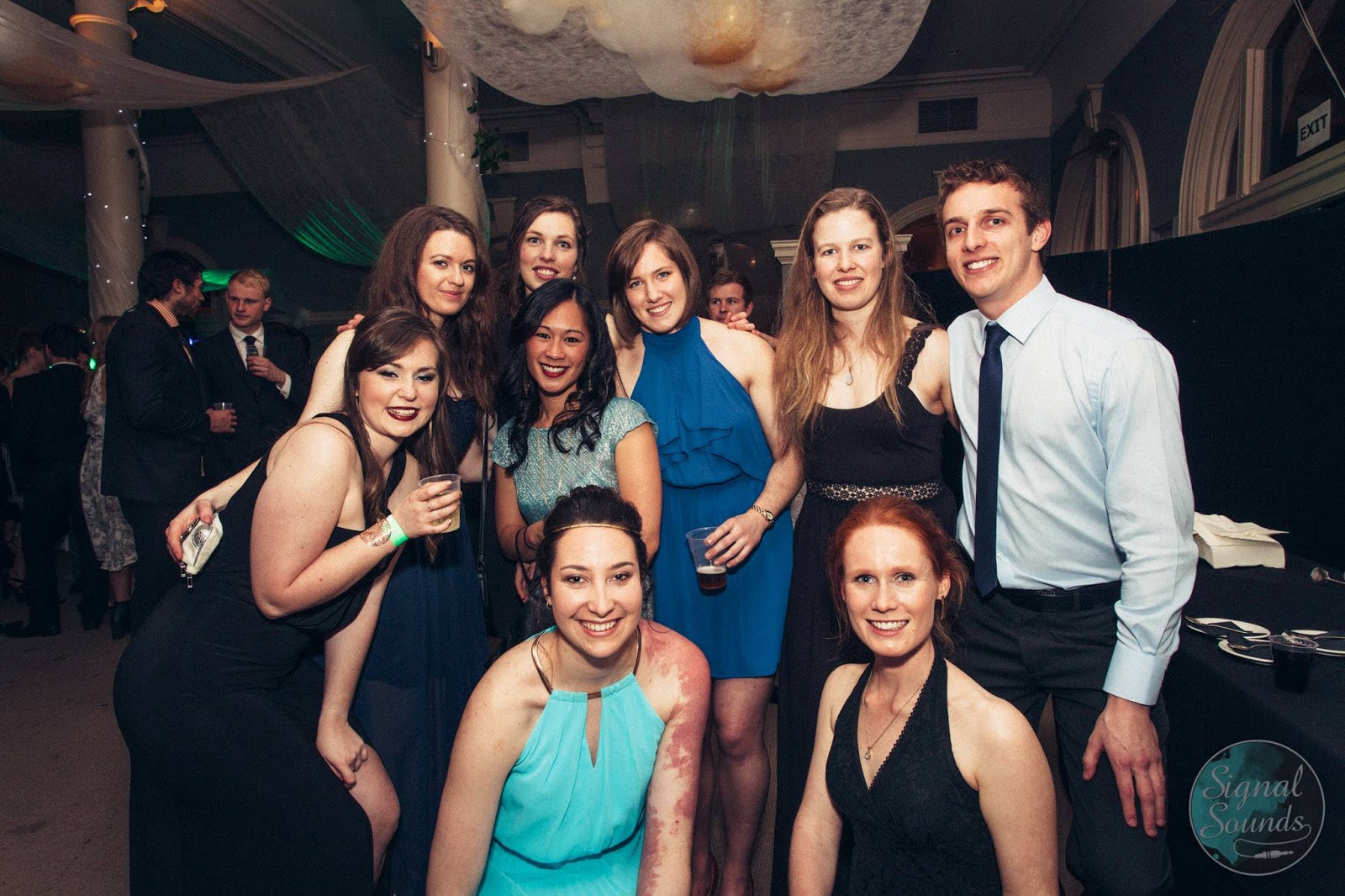
The ball itself was set at Dunedin's iconic railway station. There was a lot of work put into setting up the ball room to make it look Grecian (big thank you to the ball committee). The ball had everything: food & drink, live artists, DJ, lights, cameras, dancing. Photo-wise there was a photography guy who stayed around the dance floor, and a dedicated Grecian scene group photo area - with props n' all!  


Wednesday, 5 August 2015

Y3S2W5: Hands Up

Last Friday we were given our preliminary fourth year placement locations. I'll keep you all in suspense as to where I'll be placed. I created a quick graphic showing where AUT send their fourth year students versus where UoO send their fourth year students. (My artistry is at a 'stick-man' level, so bear with it!). Pleased note that I've likened the students of both schools to superheroes (and not making one a villain)... However, I'm pretty sure Yoda would beat Superman if they were to clash over a turf (clinic) war... 


Hand therapy was the theme of Integrated Studies this week. We had a guest lecturer Hand Therapist take two lectures. The first lecture was pretty gruesome (awesome)! We saw hands that had been chopped, crushed, burned, broken, congenitally deformed, post surgery, missing skin... we were impressed to learn about the intricate work that a hand therapist can do to facilitate healing of the hand. We were reminded of the complex anatomy of the hand and forearm then given skills to differentially diagnose the involvement of different structures. The lab associated with this theme had us measuring pinch strength, sensation testing with filaments (it reminded me of fishing line of different diameters), STI testing (Shape, Texture, Identification test... nb. physios don't do sexual health screening), palpating structures (bones, ligaments etc), differentiating between extrinsic and intrinsic muscle stiffness (i.e. lumbricals), muscle testing (very specific!!), reducing a finger dislocation, and differential diagnosing (tennis elbow, radial tunnel syndrome, posterior interosseous nerve syndrome) and treating conditions of the upper limb such as Mullet Finger & swan necking.

Hand Therapy is NOT Palmistry
One of our lab demonstrators for a hand therapy lab suggested the following book was a 'bible'... so I've added it to my growing physio library of books (and ebooks).

The CVP lecture and lab looked at physio interventions for respiratory disorders: breathing control techniques, relaxation positions, postural and autogenic drainage, flutter/acapella and PEP (positive expiratory pressure), percussion/vibration. We also looked at inhalers, spacers, nebulisers and oxygen therapy devices.


Cultural competence lab had us reflecting on our prejudices, culture and building rapport by talking about our ancestry/family history and ties to regions of the world/NZ as is the cultural norm with Maori greetings (rather than introducing ourselves and getting straight to the point of what brings them in to the clinic).

In social events this week, we had an inter-faculty quiz night on Thursday and a piss-up on Friday!


Coming up next week is the annual physio ball!

***

 I spent some time browsing around the internet for more physio memes!  
I'm definitely blurring the line between good humour and poor taste with a few of these.


Hopefully you got a chuckle from a few of those!