Tuesday, 7 October 2014

S2W13: Y2 Summed & Summarised

Final Week of Lectures & Labs
University 2014 is coming to an end.
Almost halfway through the four year degree - two years to go!

Tip for surviving physio: create positive memories - this is a three part process.
  1. Create: Don't leave positive experiences to occur by chance. This isn't lotto. Each individual has to participate in and facilitate an experience in such a way as to achieve a positive and memorable outcome. Be pro-social, mindful and have initiative.
  2. Positive: Interpret and appraise events in a positive way. We often forget that we are in control of this. Just like 'we are what we eat' we also 'feel what we think' - some minds just need a little more convincing than others.
  3. Memory: Remember good times with a regular, open dialogue. Documenting worthy events is also a good prompt for practising remembrance. Take photos, blog, tweet, catch-up and reflect with mates.

We have now completed the anatomy of the whole human body (minus a few odd ligaments... there have been reported to be 16 ligaments stabilising the thumb! We thankfully don't need to know all of them). Otherwise, we've comprehensively covered the body from head-to-toe, inside-out and from outside-in! We wish the cadavars good night knowing that they will now sleep tight (they'll probably wake up with a stiff neck come summer 2015). In the beginning we were challenged with neuro- and systems- anatomy. A few of us students still cringe when required to reproduce anatomical names and function, but we have a good grasp of the fundamentals. This will improve when we continue studying over the next few weeks for exams and beyond university. Second semester was all about the musculoskeletal system, which is great because we can now align our knowledge of muscles to movements and vice versa.

Pharm has recently informed us about poisons. You would be surprised with the things that find their way into people's mouths. Not only fertilizer, silica gel (those small packets found in shoe boxes to absorb moisture - they usually have 'Do Not Eat' written on the packet), dishwashing liquid and other household substances but also plants (e.g mushrooms, acorns and rhododendrons) and therapeutics (e.g paracetamol, diazepam and simvastatin) are consumed and reported to the toxicology department's 'National Poisons Centre'. The centre offers free advice and information on the toxic effect of whatever has been consumed. Furthermore, there are a few antidotes and methods taught in our lecture that may be used to reduce toxic effects. I'm not entirely sure how this is directly relevant to physiotherapy, but it's interesting info all the same. Forcing someone who has ingested something toxic to vomit is not a good idea! Mainly due to the risk of inhaling your own vomit.

Rehabilitation science covered the basic science of rehabilitation in semester one and over semester two we have covered MSK tests and treatments for the lower limb. This week covered strapping/taping for clinical purposes (not necessarily for sports people with injury). We even had a look at kinesio taping for lymphatic drainage too! The neuro lecture put everything into one big picture for us on Monday -  the role of the physiotherapist in the interviewing, examination and  treatment of neurological disorders. There were two neuro labs this week specifically for supervised practice of transfers, neurological testing, using associated equipment and interpreting gait / movement strategies. I had a competition to see who could pull off the longest wheelie in the wheelchair... whilst I lasted about 10 seconds, I also fell backward in slow motion (due to my almost pristine control - only my dignity was damaged as the class was watching from the corner of their eyes). My competitor lost that round but regained the title after perfecting the wheelie by the end of the lab. In other wheelchair antics, apparently there is a secret, 'underground' wheelchair club whereby you must wheel yourself through the parallel bars to become a member (try not to get stuck!)... I've now broken the 1st and 2nd rule of wheelchair club.

Clinical practice is a broad paper. It deals with implicit issues affecting practice, such as culture, psychology, ethics, evidence based practice and hydrotherapy. It has also opened the door to our first experiences in clinical practice / placements. Through these doors, we learned that health professionals in hospitals need a place of quietness and the drug room is perfect for writing up patient SOTAP and discharge notes. Mid-way through semester two a lecturer installed hope by reporting that the sun was indeed rising earlier (via powerpoint images of a Dunedin sunrise and time the photo was taken) - a sign that summer is on its way... perhaps we could have had the lecture finish in time to watch the sunrise first hand (we would have to be up super early - although I'm not sure that this would improve class turn-out).

My flatmates have been great over the year. This week the third year physio flatmate of mine made me dinner on Tuesday (randomly... but I'm not complaining!) so I must think of a way to repay her kindness before she leaves for the summer. My other flatmates are studying hard for exams like good first year students should.

Lab Group A... #PhysioFun

Proof of Sport Medicing Certification

No matter how many times you say you're a sports medic... some will always think of you as a physio. 


I would like to thank all who have taken the time to read my blog this year. I look forward to continuing my journey through undergraduate physio and sharing my experiences with you next year (2015) and in 2016. I wish to extend my thanks to the students and staff who have contributed to the excitement had thus far - I look forward to your enthusiasm next year.


I'm only going to write one more post this year to cover my experience through the exam period.
It's time to put knowledge to paper!

Wish us luck!

Tuesday, 30 September 2014

S2W12: Physio Politics

One week until the end of year exam period begins!
Daylight savings has begun... spring those clocks forward an hour!


Voting for 2015 Physiotherapy Student Association (PSA) president and executive positions were open (for Otago physio students to vote). There have been some great campaign videos - watch out 2015 second years; that physio camp, wine & cheese and pub crawl will probably be a bit more epic than the last. The candidates left a political campaigning legacy in physiotherapy history. Teej (one of the candidates and now president for 2015) scripted and produced a superb campaign video - it's worth viewing, two thumbs up, mighty good. Enjoy!


After speeches from 2015 candidates running to be a part of the exec and those running for presidency, the current president asked grilling questions to each candidate such as "you are organising the physio camp and forget to book the marquee, what would you do?", "what is your favourite song? - sing it", "what is your secret to getting completely ripped?"... and there were the not so blog friendly questions which gave the audience a good laugh. Good luck to the exec in 2015!! And many thanks to the current exec for looking after us so very very well.

PHTY254 lecture on Monday was on reactive and degenerative tendinopathy. Apparently there is a communication mechanism (RNA, proteins, Ca2+ and other environmental factors) allowing cells of the tendon to communicate. As physios, we are able to explain tendinopathy to patients like this, "some cells in your tendon have became angry that you decided to hike that mountain after many months of a sedentary lifestyle. Consequently those angry cells have swollen. You should consider resting and icing them. If you don't settle them down they will only get angrier and you will feel symptoms worsen and these cells will die off. Although they cannot regenerate once they die, we can help to reduce the pain and restore function". Both reactive and generative tendinopathy can co-exist in the same tendon which makes treatment important - each requires different management... physios are here to help!

Anatomy continued with muscles of the forearm and bones of the hand this week...
The way to remember the carpal bones of the hand is via this phrase: "Some Lovers Try Positions That They Cannot Handle" or "She left the party, he took the tram". I.e. Scaphoid, Lunate, Triquetrum, Pisiform, Trapezium, Trapezoid, Capitate, Hamate. It's certainly cleaner than the phrase to remember the cranial nerves! Below is a handy way to learn some of the flexor tendons that arise from the medial epicondyle of the humerus... we can count the muscles with our fingers! You can imagine how entertaining it is going to be for exam supervisors watching us students as we act out our myotomes, dermatomes, cutaneous nerve supply and now muscles of the anterior forearm!
 
It's revision time for me again, and so for the next few weeks I'm going to highlight some more interesting bits from my semester two papers.
  • Your friendly physio's tip for surviving your next daunting dental procedure: after the dentist has injected your gum with lignocaine (a local analgesic) to drill into your teeth or pull that now eroded tooth covered in sugar enamel (like a toffee apple) out  from of your mouth - remember to bite down of something and activate the gum region which has just been injected/infiltrated. Don't bite on the dentists fingers - they won't forgive you for that. But biting on something is important for the uptake the lignocaine into the nerve axon - after so, your sodium channels (which are needed to propagate pain signals) will be blocked. Thankfully you won't feel much more than a pressure during the procedure. However, lignocaine moves through the axon membrane randomly in a non-ionized state (when injected, most molecules become ionized and cannot serve much benefit until they are, at random, uncoupled with H+ ions) and so to improve your chances of a successful pain block we recommend adopting better oral hygiene practices as to not need the dental procedure in the first place!
  • The common cold virus (rhinovirus) is so small that 500 million can fit on the tip of a dressmakers pin.
  • We had a lecture on mental health versus mental illness for PHTY255. One fun fact (although I'm not entirely convinced that it's a rigorous study) is that blue light (from tvs, mobile phones etc) generally cause individuals to have a poorer night sleep than if it were a red light in the room. How's that for random?!

Tuesday, 23 September 2014

S2W11: TGIF

Two weeks until the end of year exam period begins!
We have five exams like we did in first semester.
Four written. One practical.

I've come across a new undergrad physio blog written by a UK student studying at Keele University in England. I look forward to following Lauren and comparing her journey through physio training (she also blogs about not-at-all physio related things) in her blog 'Totally-Typical'.

The physio students association organised a 'blood drive' for students to donate blood to the New Zealand Blood Service. This service supplies NZ hospitals with blood needed for transfusions. The service has a mobile unit that came on campus for us. My blood is always trying to be positive (B+).  I think everybody should consider donating blood - donating is definitely not a pain in your neck!! (Okay, I'm now done with puns for the week).

"Sitting is the new smoking"... The co-author of Clinical Sports Medicine, Karim Khan spoke about health on Radio NZ (a talk-back show) following a national New Zealand physiotherapy conference last weekend. He made many interesting points that I knew about already, but you may not currently know. Have a listen: http://www.radionz.co.nz/national/programmes/saturday/audio/20150402/karim-khan-activity-and-health

Neuro this week covered a range of conditions associated with the cerebellum and their associated clinical tests. Conditions included: asynergnia, dysmetria, dysdiadochokinesia, ataxia, dysarthria, dysphonia, nystagmus, intention tremor and hypotonia. There were many tests but my favourite was the 'rebound test'. The rebound test is useful for testing dysmetria; the lack of motor timing. Performing the test involves the patient holding their arm away from their body with their palm facing toward their self. The therapist pulls the patients hand away - the patient has to resist this movement. At random, the therapist will remove their contact with the patients hand which will cause their hand to move toward their body. If the patient has an untimely response, the patient will hit them self (which may be in the face, depending on where the hand/arm is positioned in the first instance). This could make for a good drinking game.

Pharm discussed common GI tract problems (ulcers, vomiting, diarrhoea and constipation) and their medication. It is interesting that laxatives can also cause constipation due to reduced potassium, sodium - this triggers the aldosterone system for water retention. Stool needs to be somewhat moist to pass freely. In addition, when the large intestine is cleared using laxatives, the time taken to refill is prolonged and can be interpreted as constipation by the patient. That's enough shit talk for now. The best medicine for constipation is a healthy diet.

For the majority of Monday, the weather seemed like it had fallen back into it's wintery ways (we had a short lasting snowing episode to 300m above sea level... not the spring weather I would like!!). Lecture content has built up over the year and one lecturer kindly saved us from having to read up about osteoarthritis by providing all the details in the lecture presentation - this was much appreciated!
On paper, Tuesday looked quiet! If a sports team looks good on paper, we believe their chances of winning is high. If on the university timetable our day looks good (i.e. one class... a rare event) we believe our chances of winning (having a relaxing day) are still pretty slim... plenty to study, research and practice!! At least the weather was back on track - with a noticeably warm breeze and sunshine pouring down at 9am.
Wednesday was a day for ice cream in our lunch time break. It was a fairly standard Wednesday otherwise. Some of our lab group got together and practised physical assessment and treatment techniques. We also popped into the anatomy museum to refresh our knowledge of lower limb anatomy - oh boy, so much to study!!
Thursday anatomy finished like it has done every week with a test. I attempted to get up to date with my pharm notes... I've still got many lectures to go!
Thank god it's Friday!! We finished the week with a lecture about antimicrobial medication in pharmacology. I continued to collate information ready for studying and plan to have the evening to relax.

Tuesday, 16 September 2014

S2W10: Tweet, Tweet, Tweet

Three weeks until the end of year exam period begins!
Our exam timetable is out!
& The sunshine is too!

Subjects at a glance:
Anatomy has now covered muscles of the shoulder and arm.
MSK is challenging our clinical reasoning - how we diagnose and plan treatments.
Neuro topics covered this week include spasticity, muscle tone and reflexes.
Pharm has discussed endocrine pharmacology.

I start writing this blog on Monday and quite often wonder what exciting things I will write about in the week (or if I will even have anything interesting to report!). So I was pleased to see that lecturers are contributing to the clinical and academic physiotherapy community on social media, namely, Twitter. I have decided to follow a few in the hope that they continue to post interesting links (and perhaps put up some end of year exam hints... wishful thinking, right?!). Interested to see what they tweet about? - Follow the links below:

Clinical Biomechanics Otago - @OtagoBiomech
Centre for Health, Activity & Rehabilitation,  UoO - @OtagoCHARR
Physio Clinics, UoO - @PhysioclinicsDn
University of Otago (UoO) - @otago
You can even follow journals and celebrities (physio staff included)!

Feel free to Tweet to me @PhilNZ10 about this blog.

Anat dept put choc up for grabs in a mid-lecture quiz which featured (90% anatomy questions and 10% random questions like 'how many films has Rachel Hunter starred in'? And 'who was the first international artist to feature at Dunedin's Forsyth Barr Stadium?') Do physios need to know general knowledge questions like this? Probably not, but it'll save dividing the chocolate between 100 students.... because we are all pretty good at anatomy - it's our bread and butter! We also learnt a quirky phrase to remember attachment sites on the bicipital groove: "a lady between two majors"... Tere's Major, Latissimus Dorsi, Pectoralis Major.

Pharm lab was all about diabetes. One task was to test our blood glucose level. My fasting blood glucose level was 5.2mmol/L which is within the normal range of 3.5 to 5.5mmol/L. It is on the higher side of the normal range, probably because I finished off a reasonably large tin of pineapple pieces (with Weetbix for breakfast) an hour or so before that lab. Good to know my pancreas is working! Blood glucose measuring involves drawing blood with a pricking device and using a machine to analyse the blood. Also in the lab we had a go at self-administering a subcutaneous injection (for type1 diabetics, this would have insulin in it). The hardest part was getting over the psychological barrier of stabbing your stomach fat! There was no pain associated with the injection thankfully! If you are diabetic your doctor or physio can better inform you about what is involved and how to use the equipment.


Tip for surviving physio: Give everything a go at least once - you need to be able to relate to patients experiences!

In social events, there was a combined 2nd and 3rd year BYO on Friday evening!

A little bird told me that they were also tweeting this week... well, not so much told me - rather I heard them tweeting. The pleasures of spring! 

Tuesday, 9 September 2014

S2W9: Dodge, Dip, Duck, Dive and Dodge

Monday, 8th September: World Physiothearpy Day
The school of physiotherapy organised for students to give 10min massages to the public as a part of world physiotherapy day. Massages were given for a gold coin donation with proceeds going to the campaign to save the community physio pool. This was a very popular event! People seemed to want to get a massage - some people waited for up to 45min... that's how popular this event was! I began massaging around 4pm for an hour and encountered a wide population sample including a 91 year old male! This is the oldest person I've massaged yet! I wonder if I'll ever be able to match or beat that age (for giving a massage to) in my professional career as a physio!

Our PHTY255 lecture had us appreciating disability and attempting to shift our global appraisal of what it means to be disabled. We looked at the medical model and conflicting (but also very agreeable) psychosocial paradigms of disability. Obviously all the paradigms have consequences, assumptions, merits and constraints. It's a field of study in itself and so we just had an introduction lecture to it this week. We were told about Tainafi Lenfono 'Nafi' - he is a 4th year student at Otago University's brother physiotherapy undergraduate institute -  AUT University in Auckland, New Zealand. Nafi is passionate about sport performance and himself currently plays at an elite level in New Zealand. Furthermore, he has a determined and optimistic outlook, having overcome many lifestyle challenges most of us, New Zealanders, would fall short of achieving in such good spirits. Nafi become a tetraplegic having received an injury playing rugby in 2007. Since then he has overcome many challenges, begun studying physiotherapy at AUT University (which has, in itself, many physical challenges) and is looking to graduate as one of the first (if not, the very first) tetraplegic physiotherapist in the world. This is an inspirational feat.


Disability is NOT a defining feature of any person, rather we all have internal constraints with medical and social consequences. We should focus on "ability" and how each individual defines themselves.... how would you like others to know you?

Dodge, dip, duck, dive and dodge: the 5D's of Dodgeball. Physiotherapy has it's own five D's: dysarthria, double vision, dysphagia, dizziness and drop attacks. But often, it feels like we, as physio students, are playing dodgeball. In physio we're dodging red-flagged conditions and referring them to their doctor; we're dipping on one leg to demonstrate exercises for knee rehabilitation; we're diving into text books for self-directed learning tasks which seem to have almost completely permeated PHTY254 neuro and MSK; and many students are dodging health care staff, equipment and patients on our placements as they busily rush around the hospital. Thankfully nobody is throwing syringes, patient folders or needles at us if we do get in the way! Dodgeball (the actual game) is pretty fun - it's a shame we haven't played it yet in our labs! Some students might have had to dodge, dip, duck and dive from golf balls and clubs on Friday! ...

This week played host to the annual student physio golf tournament!

My last day of placement for 2014  was on the 8th floor of Dunedin public hospital. Time to organise and hand in my placement portfolio for the year! The placement started with rushing around trying to find our supervisor and ended with getting out of the lift on the wrong floor! This was very amusing for us! Between this, we had another great placement and was allowed to help with transfers, discuss and contribute to SOTAP notes and even sit in on a 'rounds' meeting. This was very comical - the staff are simply full of life and making the most of treating ill patients - hopefully they pass on all that positive energy. Although this was my favourite placement to date; the highlight of my week was having some fun away from class, i.e. giving back to the community (massage on Monday) and enjoying the outdoors. In particular, a group of us had a go at 'steel wool photography' at Sullivan's Dam. You soon get to know the class mates with similar interests and the ones who just like to light things on fire!


One of my favourite places in Dunedin is up Flagstaff walking track. I walked up here on Sunday last week - it was truly a day of sunshine! You could actually run up here from university if you were fit and had a few hours to spare (and then a few hours back). If you value your outdoors or country landscapes, then Dunedin is the city for you!!


Tuesday, 2 September 2014

S2W8: Onward & Upward!

Spring is here - we survived the winter! 
(It probably wasn't as bad as we made it out to be).

Having said that, I did start the week with another cold! More phlegm to expel and a headache. I admit that I did skip a few lectures in an attempt to recover in time for Thursday's placement. I did however attend my labs and tried to uphold the highest of hygiene standards with the help of some cold medication..... drugs!!!

Not that my intentions are to advertise any drugs through this blog!
I'm on my third and final placement for the year, again at the Dunedin Public Hospital. However, I'm a few floors up from the outpatients physiotherapy clinic (eight floors up to be exact)! It's nice to be finishing on top (there are only eight floors to the Dunedin Public Hospital) with a mixed bag of patients including elderly who have fallen, patients with chest infections, strokes, other neurological conditions and oncology patients. I think the hospital placement is going to be my favourite. Physio is a team sport, there is an amazing interaction between physios and other staff - I simply could not describe how awesome it is. Bring on next week!

Quote of the week: Physio: "Are we your favourite people in the hospital now?" [Patient smiles but withholds a reply]... Physio continues, "We're all seeking your attention, so just tell all the staff that they're your favourite."  - there seems to be a bit of rivalry (healthy competition) between the nurses, occupational therapists and physios to be the best health team.
Physio sign I saw on the way up to 8th floor

Halothane, Enflurane, Isoflurane, Desflurane, Sevoflurane... Diazepam, Lormetazepam, Nitrazepam, lorazepam, clonazepam, flumazepam, tremazepam, triazolam, midazolam, chlordiazepoxide... You get the idea, there are a lot of drug variations with common suffixes! Thankfully so, as this helps us to distinguish which family or class of drug they belong to. Lecture one for pharm this week covered anxiety (anxiolytic action), sleep deprivation (hypnotic action) and general anaesthetics (sedative action)... with comprehensive insight to the mechanism of action involved. We also briefly discussed the Michael Jackson - propofol incident. The joke for the dental students in our lecture was to use the drug 'midazolam' for dental surgeries because it produces retrograde amnesia i.e. they won't remember the bad surgery experience!

Pharm on Friday 9am was also interesting as we discussed local anaesthetics, with the suffix -caine. Yes, like cocaine! But the biggest laugh was in relation to the deadline for our pharm assignment. Lecturer: "I know there have been a few emails from students confused about the deadline for the assignment - the lab manual says 1pm today, on online it says 5pm. I would like to clarify it here now, that the deadline is actually 9:30am." The class reaction was classic! Lots of panicked people! The lecturer: "bazinga" (quoting the tv series, Big Bang Theory - a phrase used on the show telling that you've been the subject of a great joke), "that's better than two cups of coffee!" (Yes, we were all awake now!!) I loved the joke. Well played/executed, great start to a Friday morning. I had submitted my assignment earlier in the week - so I got to enjoy this moment for all it was worth.

MSK labs continued with Mulligan and Maitland manual therapy concepts and techniques. This included manual therapy from grades one to four for mobilisations (we'll cover grade five, manipulations, next year) and mobilisation with movement (MWMs) techniques. MWMs had students + patients buckled together into a car seat belt.... well sort of - more like a lap belt from older vehicles from around 1990 with a buckle/clip joining a continuous loop/belt (obviously this technique is not done in a car).

MSK round two later in the week focused on whole knee and hip replacement rehabilitation. We learned the role of physios from pre-op through to post-op and discharge. These joint replacements sound easy to rehab, but there are many movements which are contraindicated, this requires the use of other techniques and a multidisciplinary approach - I for one,  think the occupational therapist sock aid is awesome!! (https://www.youtube.com/watch?v=zeVLLj-WLuA)

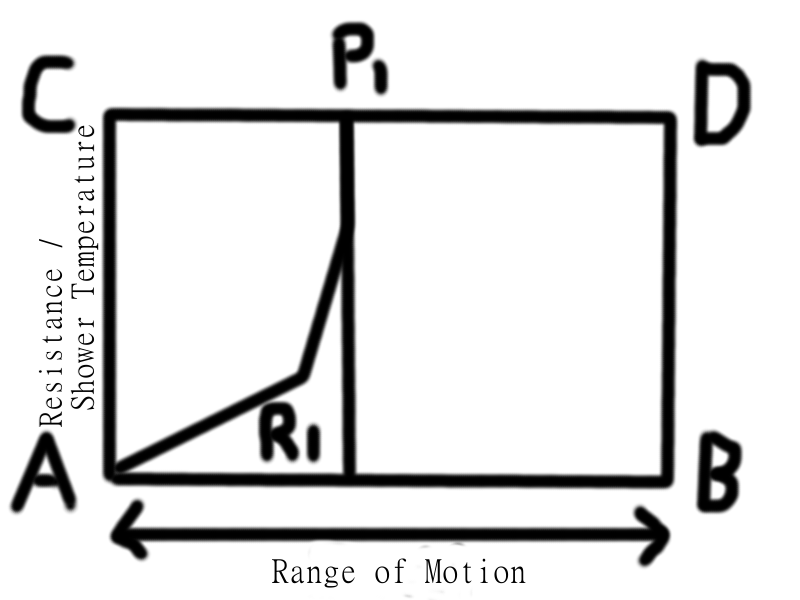
[Knowledge of movement diagrams may be a helpful prerequisite for understanding this paragraph]. One morning whilst taking a shower I ended up practising my manual handling skills (in an abstract sort of way) on the shower water lever. I decided the water temperature could be optimised by increasing the temperature. I knew the lever could be a little bit jumpy so I applied my manual skills. First I found resistance one (R1) by carefully applying pressure (note that resistance was felt at the beginning of the movement, therefore the lever hadn't yet moved - temp remained the same). I knew the water temperature I couldn't tolerate would be labelled P1 (pain 1). With this in mind I re-applied the most delicate pressure to the handle as to feel the point of resistance before the handle turned (R1). At this point I began a 4- mobilisation (the temperature increased ever so slightly, this was good!). I then got a bit impatient and tried a level 4 mobilisation (too hot, too hot!! - Quick turn of the handle back to square one - this must be what a manip feels like haha!). In the end (and after a few attempts) I had to settle for a Luke-warm shower. The distance between R1 and P1 must have been a 4-- or something. I do however recommend this as a great physio training exercise - no doubt I'll be trying this again in the shower tomorrow. I used my photoshop skills to draw out a diagram (below).

Medicing for Dunedin Tech is drawing to an end, we've lucked out of first place... next season boys!

The School of Physiotherapy is holding a fundraiser for the community physio pool (I done my aquatic physiotherapy training there earlier in the semester). It's a bit run down and the district health board were looking to close it. The physio students are giving massages for a small donation next Monday to help out / to show our concern - come and book in for a massage!

Luckily the weather over this first week of spring has been fantastic - long may it continue!

Thursday, 28 August 2014

S2 Mid-Semester Break

Top of Sandfly Mount

Sea Lion!

Cargill's Castle at night

Me through a window at Cargill's Castle... Aurora Australis going on behind me!!

Tunnel Beach with Aurora Australis (southern lights)

Aurora Australis - active storm!

Basically, my mid-semester break had me chasing night lights, wonderful views and wildlife around Dunedin... Yes, all this is from Dunedin, New Zealand!!

Also, I continued to medic! Dunedin Tech are now fighting for second place! Only one more game to go next week!


I'm still working on my photography skills.